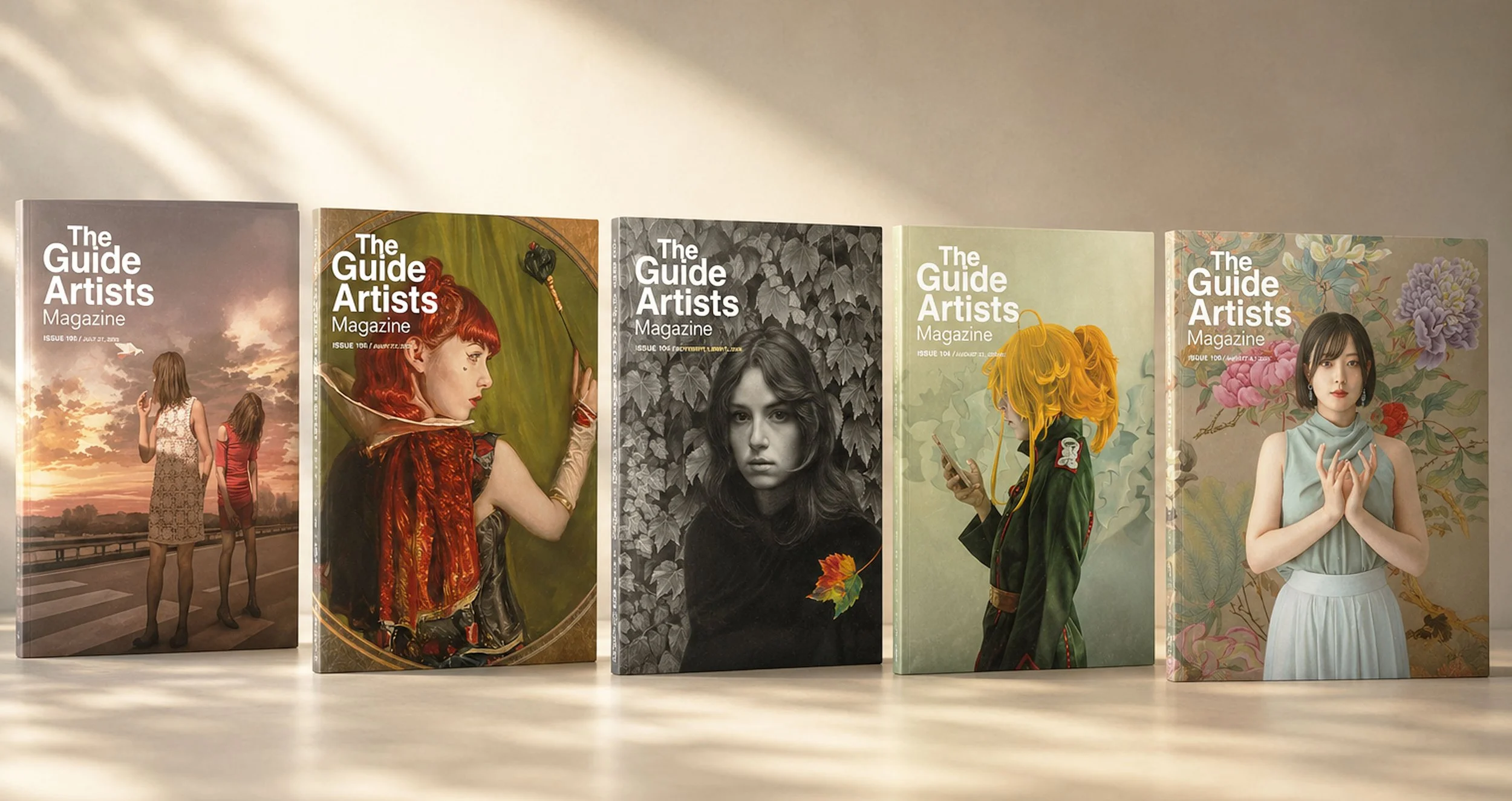
Magazine Cover Featuring Hiroshi Hayakawa
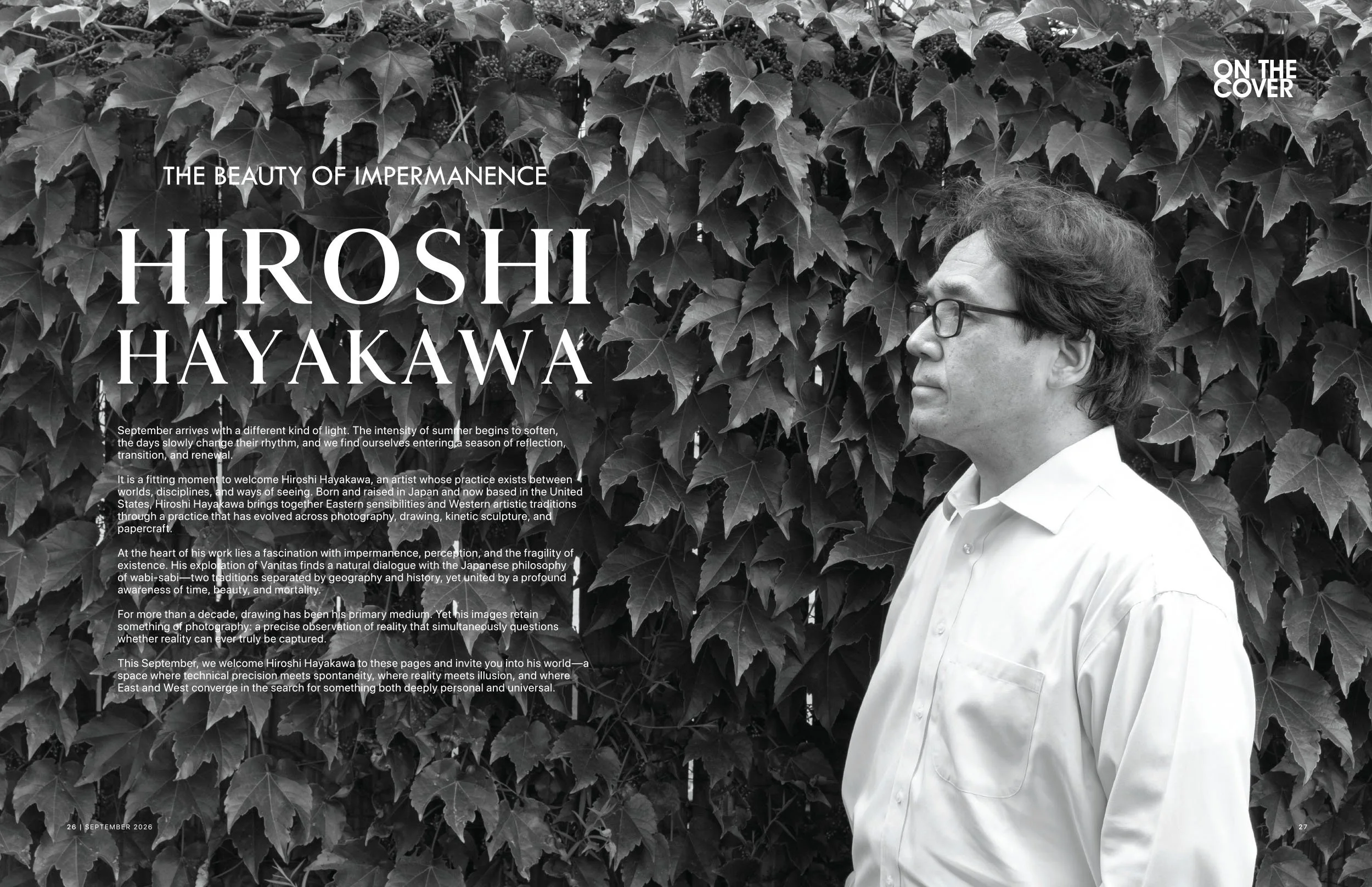
THE BEAUTY OF IMPERMANENCE
THE BEAUTY OF IMPERMANENCE
There is a quiet sense of impermanence at the heart of Hiroshi Hayakawa’s work. His images explore beauty, memory, time, and mortality—not as distant philosophical ideas, but as intimate experiences that shape the way we see the world.
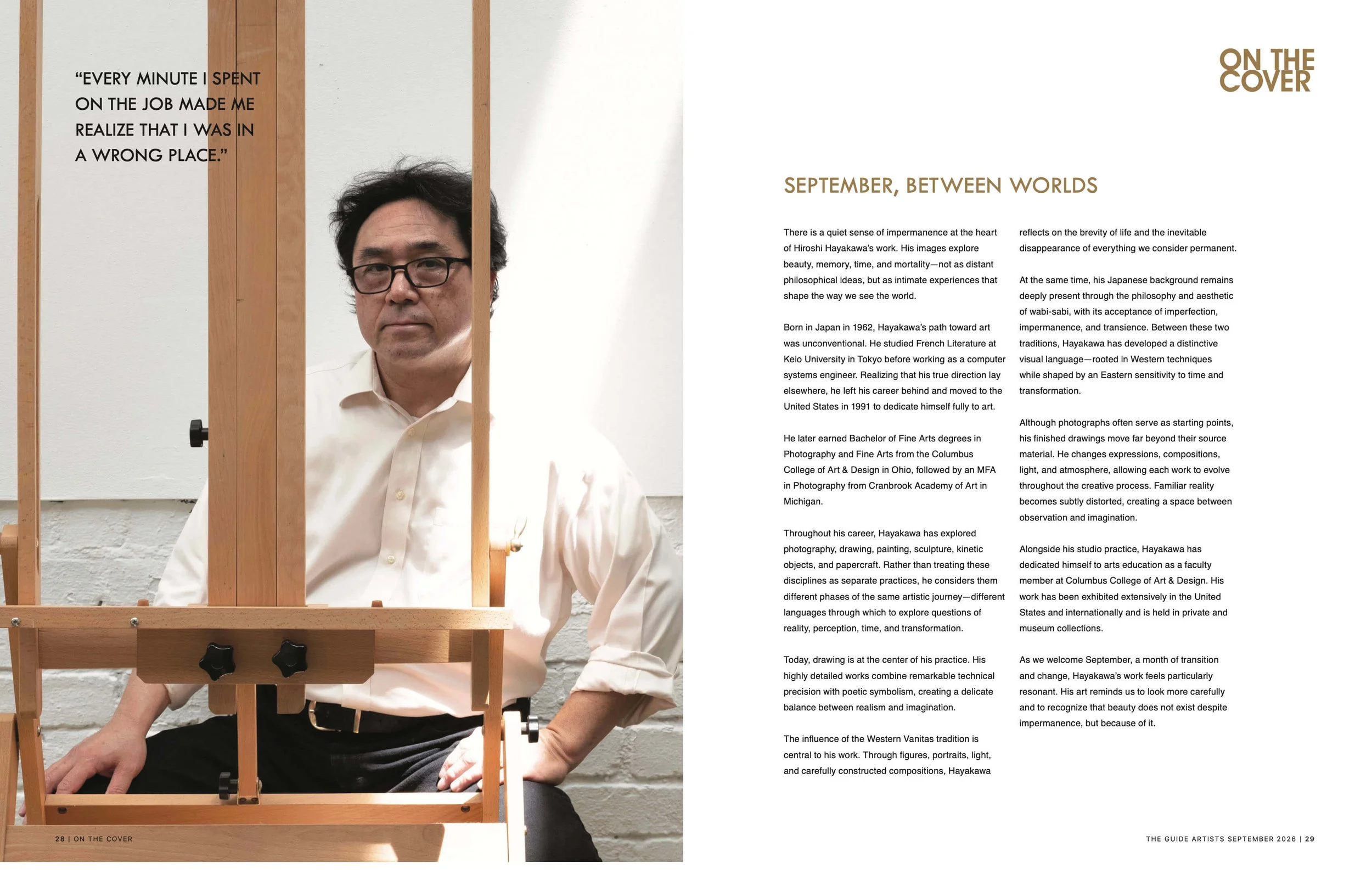
Born in Japan in 1962, Hayakawa’s path toward art was unconventional. He studied French Literature at Keio University in Tokyo before working as a computer systems engineer. Realizing that his true direction lay elsewhere, he left his career behind and moved to the United States in 1991 to dedicate himself fully to art.
He later earned Bachelor of Fine Arts degrees in Photography and Fine Arts from the Columbus College of Art & Design in Ohio, followed by an MFA in Photography from Cranbrook Academy of Art in Michigan.
Throughout his career, Hayakawa has explored photography, drawing, painting, sculpture, kinetic objects, and papercraft. Rather than treating these disciplines as separate practices, he considers them different phases of the same artistic journey—different languages through which to explore questions of reality, perception, time, and transformation.
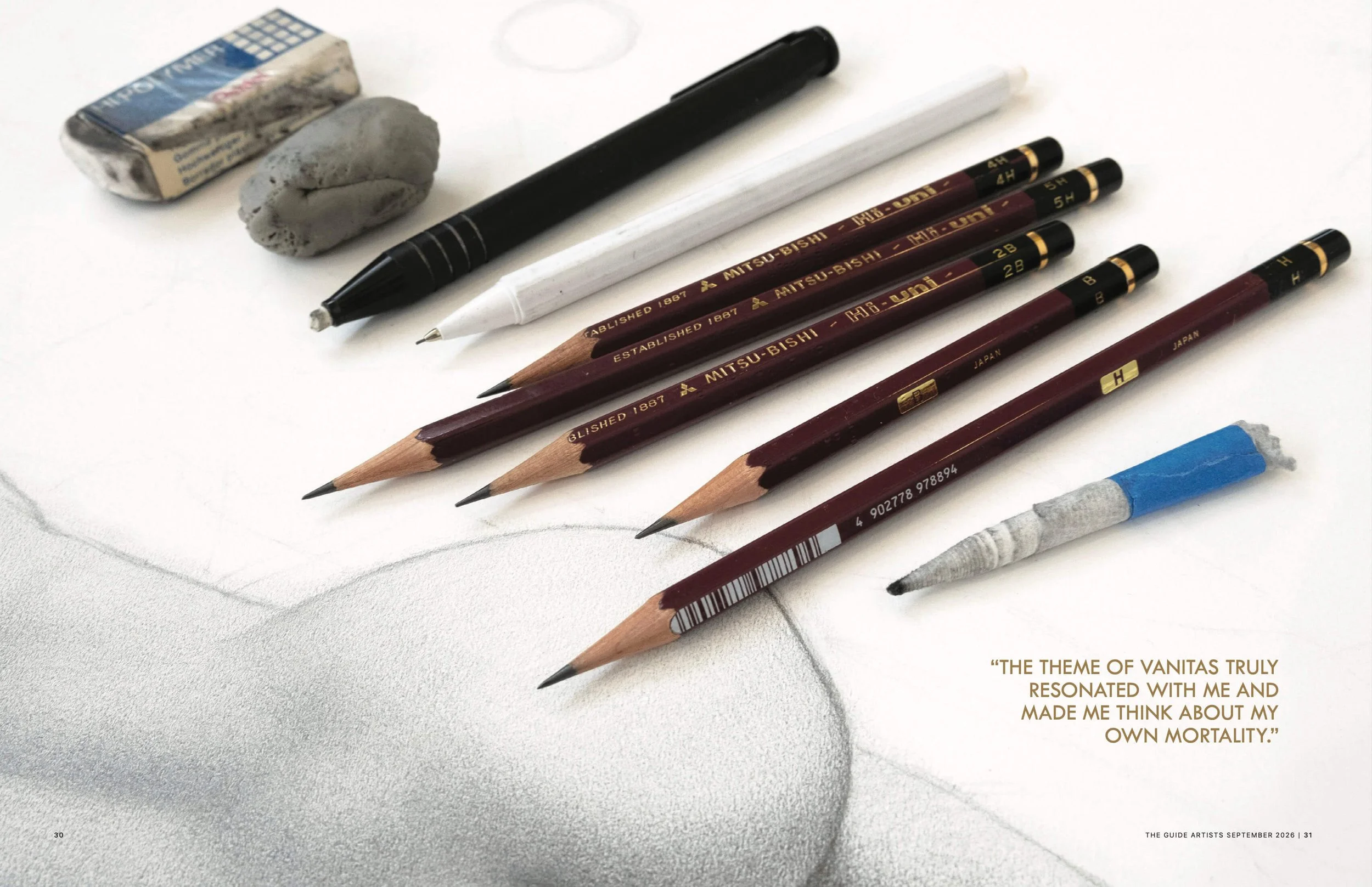
Today, drawing is at the center of his practice. His highly detailed works combine remarkable technical precision with poetic symbolism, creating a delicate balance between realism and imagination.
The influence of the Western Vanitas tradition is central to his work. Through figures, portraits, light, and carefully constructed compositions, Hayakawa reflects on the brevity of life and the inevitable disappearance of everything we consider permanent.
At the same time, his Japanese background remains deeply present through the philosophy and aesthetic of wabi-sabi, with its acceptance of imperfection, impermanence, and transience. Between these two traditions, Hayakawa has developed a distinctive visual language—rooted in Western techniques while shaped by an Eastern sensitivity to time and transformation.
Although photographs often serve as starting points, his finished drawings move far beyond their source material. He changes expressions, compositions, light, and atmosphere, allowing each work to evolve throughout the creative process. Familiar reality becomes subtly distorted, creating a space between observation and imagination.
Alongside his studio practice, Hayakawa has dedicated himself to arts education as a faculty member at Columbus College of Art & Design. His work has been exhibited extensively in the United States and internationally and is held in private and museum collections.
As we welcome September, a month of transition and change, Hayakawa’s work feels particularly resonant. His art reminds us to look more carefully and to recognize that beauty does not exist despite impermanence, but because of it.
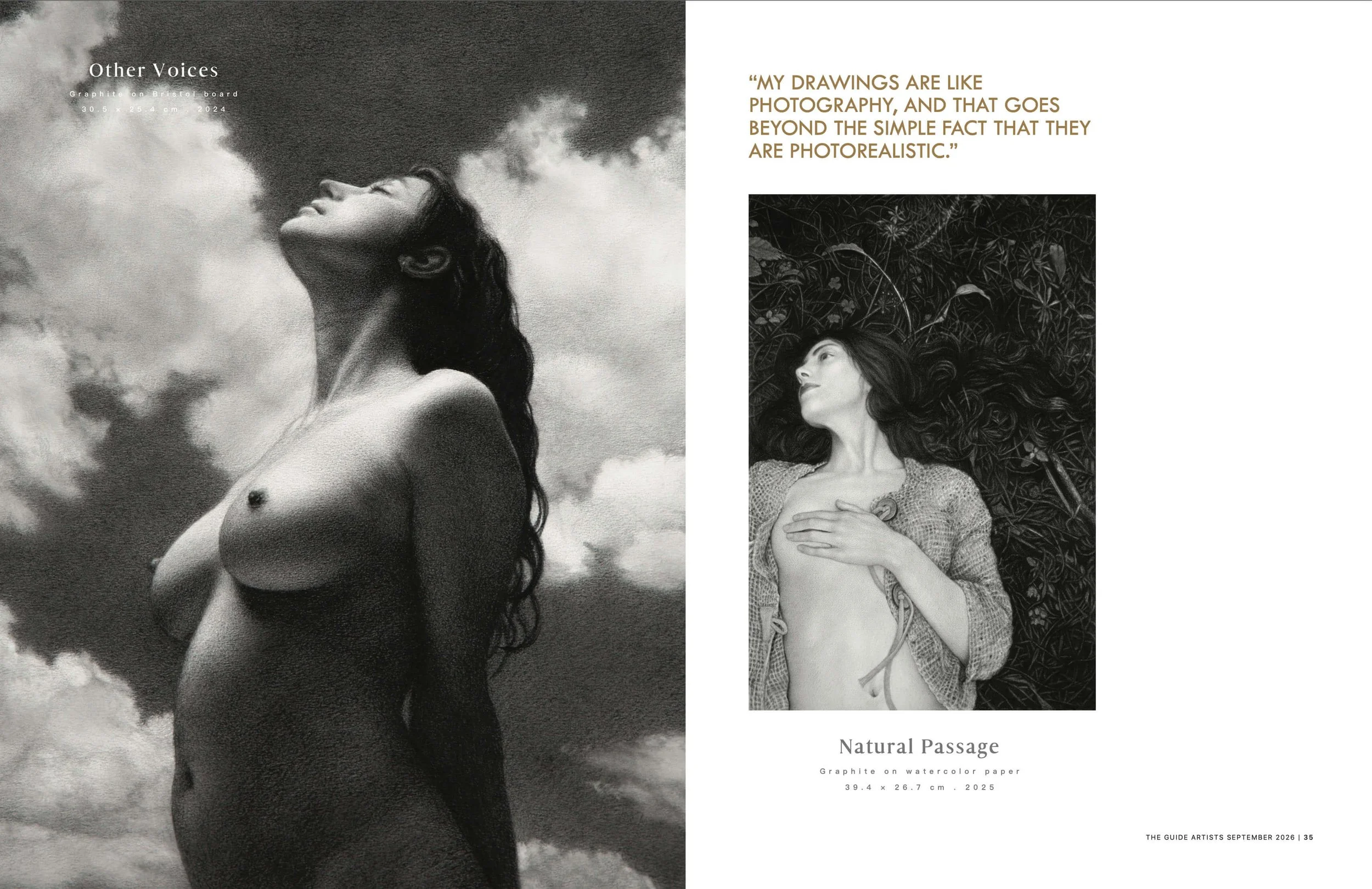
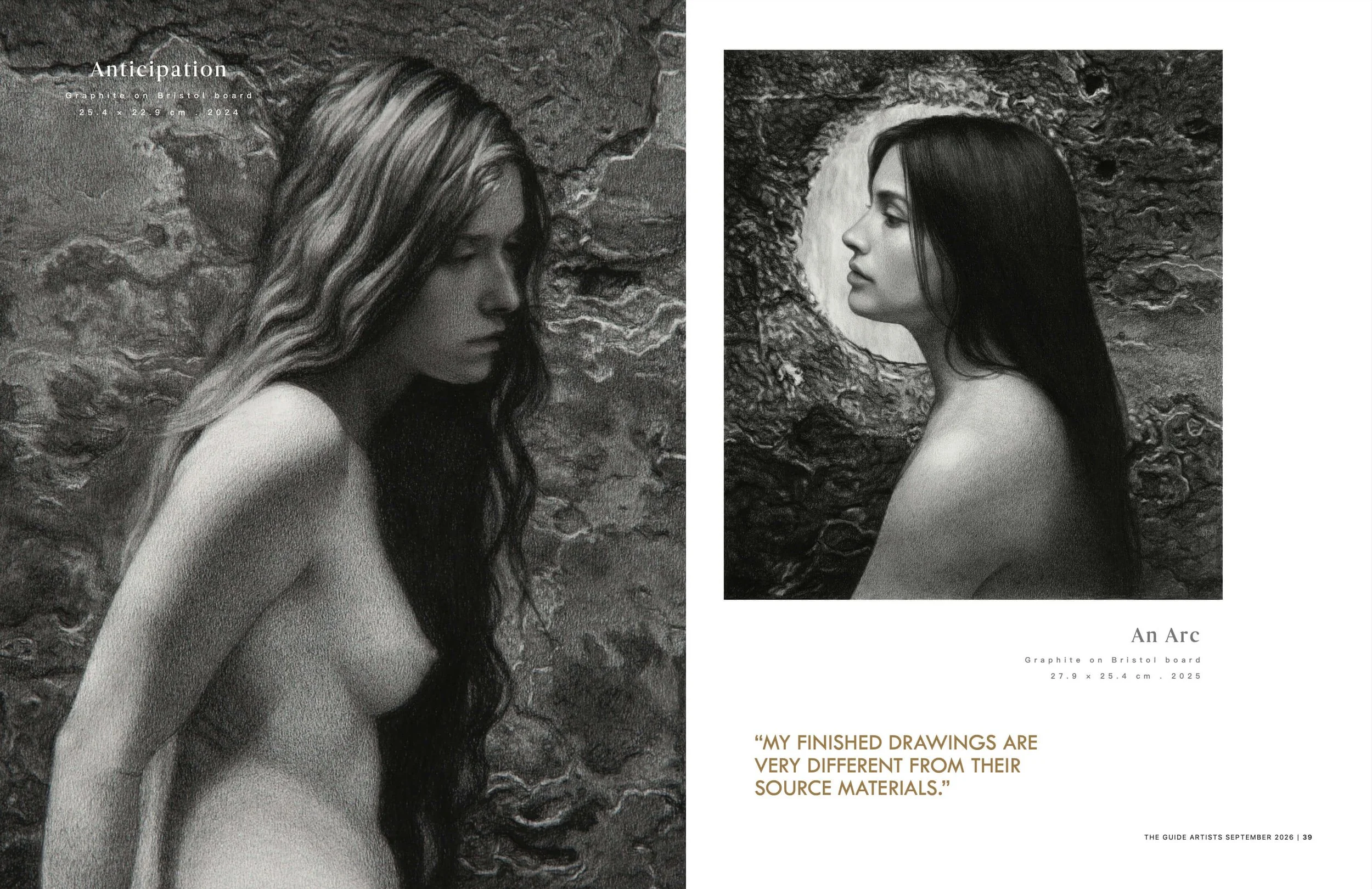
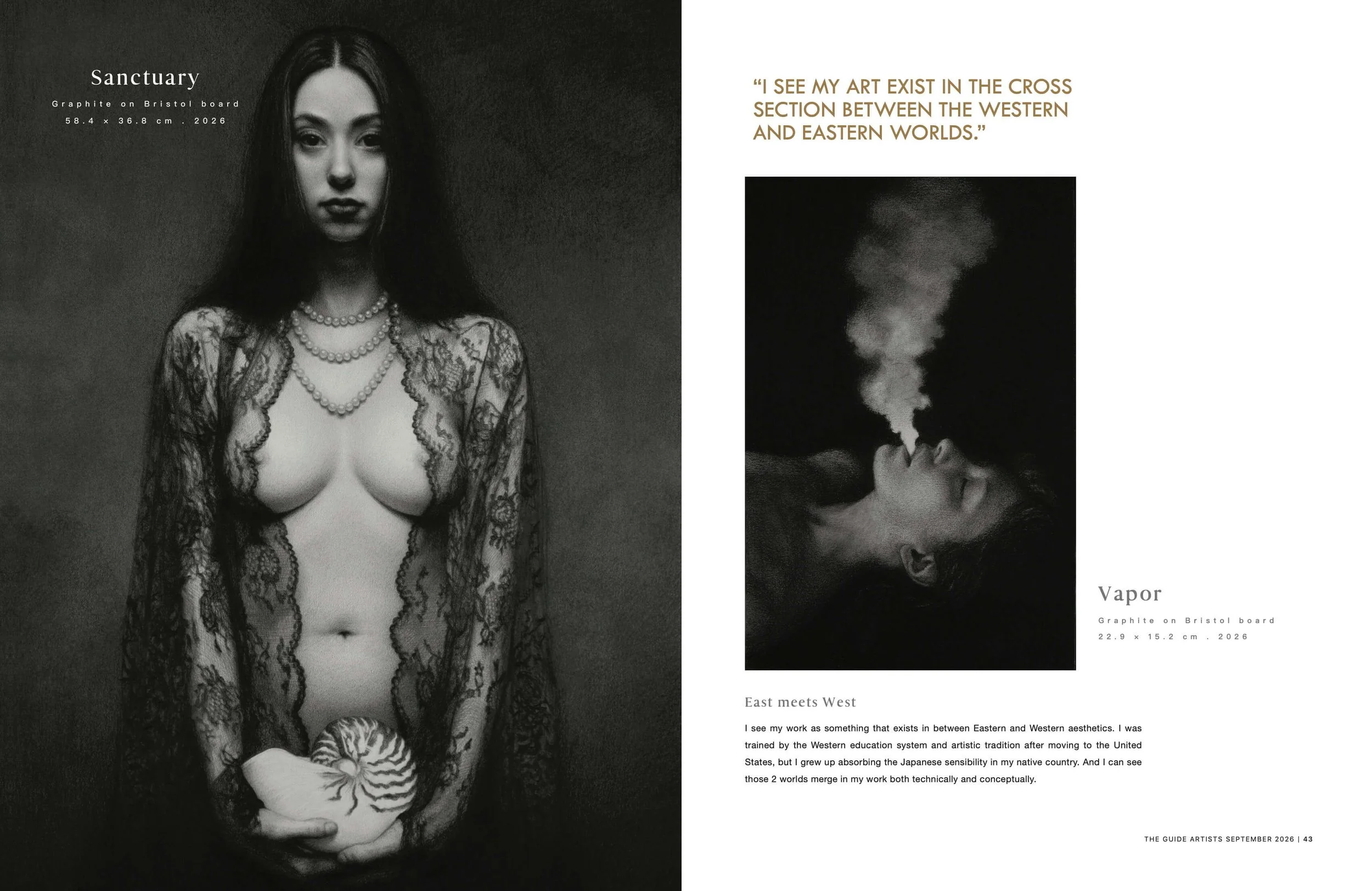
Hiroshi Hayakawa’s artistic journey is one of transformation, moving from a career as a systems engineer in Japan to a life dedicated to art in the United States. Working across photography, drawing, sculpture, and papercraft, his practice has evolved through different media while returning to the same fundamental questions about perception, identity, and existence.
At the heart of his current work is Vanitas, a theme that became deeply personal after the loss of his father. Through meticulous, photorealistic drawings, Hayakawa explores mortality and the fragility of life while subtly disrupting familiar reality.
His work also reflects a dialogue between Western and Eastern traditions. While Vanitas informs his subject matter, the Japanese philosophy of wabi-sabi—with its appreciation of impermanence and imperfection—shapes his aesthetic approach. Between technical precision and artistic spontaneity, Hayakawa creates works that invite us to look beyond appearances and reflect on the fleeting nature of reality.
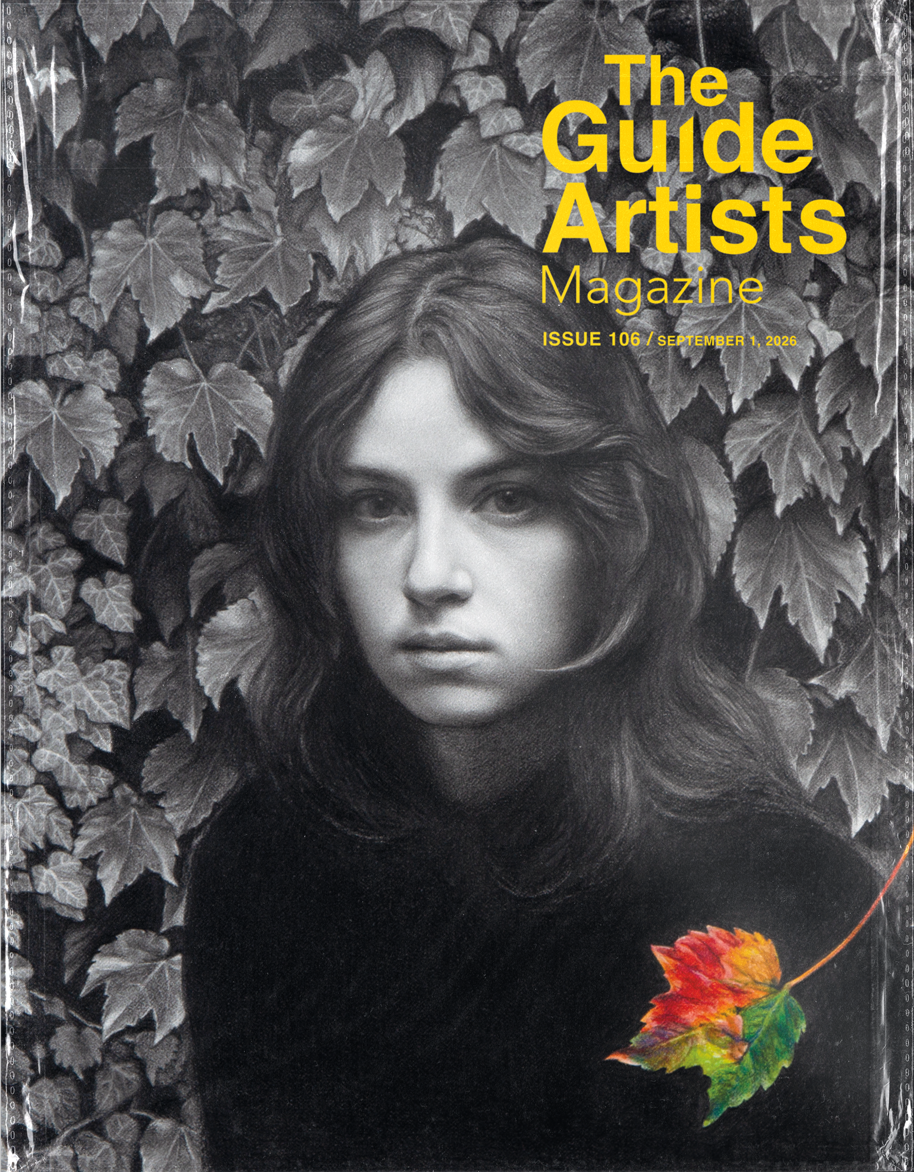
The Guide Artists Magazine proudly presents Issue 106, featuring internationally acclaimed Japanese artist Hiroshi Hayakawa on the cover. As our Artist of the Year, Hayakawa headlines the most important issue of our publishing calendar while also presenting his new monograph, to be released by The Guide Artists Publishing in October 2026.
Featuring a carefully curated selection of works created between 2012 and 2026, the publication explores more than a decade of artistic practice spanning drawing, painting, sculpture, alternative photography, and paper-based works.
Born and raised in Japan, Hayakawa studied French Literature at Keio University before moving to the United States in 1991. He later earned a BFA from the Columbus College of Art and Design and an MFA from Cranbrook Academy of Art. Today, he teaches at CCAD while exhibiting internationally.
At the heart of his work is the acclaimed Vanitas series—a powerful reflection on mortality, impermanence, beauty, and decay. Through intricate lines, organic forms, and refined symbolism, Hiroshi Hayakawa has established a distinctive artistic voice that continues to captivate audiences worldwide.
Issue 106 also features an exclusive interview with Hiroshi Hayakawa, presented in advance of his upcoming monograph, along with outstanding contemporary artists from around the world as part of The Guide Artists Magazine’s weekly publishing program.
DISCOVER MORE… THE GUIDE ARTISTS MAGAZINE ISSUE 106