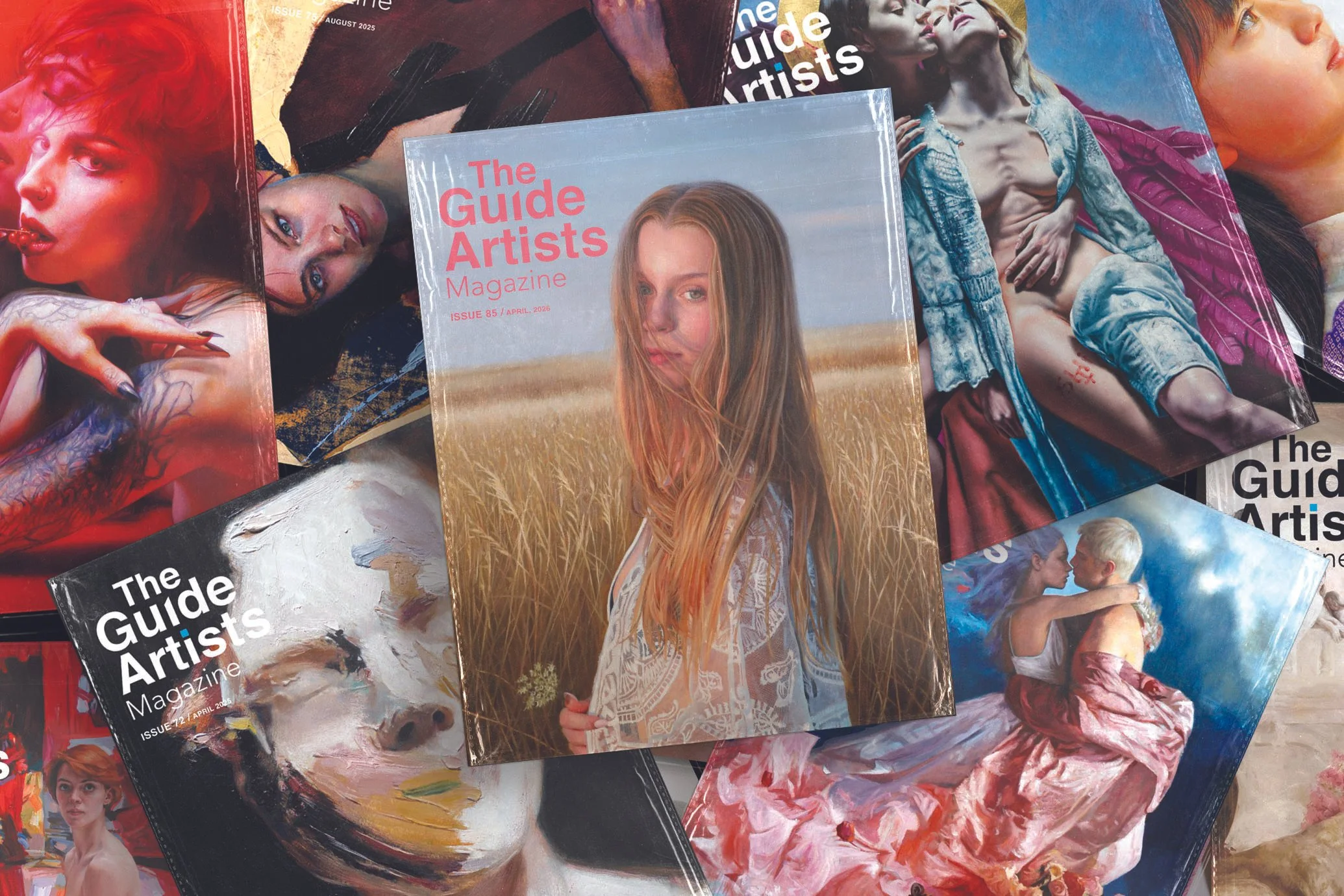
TODAY´S HIGHLIGHT - Art in the Digital Age
In today’s hyperconnected world, art has found a new global stage: the digital realm. What was once confined to studios or local galleries can now reach thousands—if not millions—of people within seconds through social media. This shift has transformed how art is discovered, shared, and appreciated worldwide.
Our blog is designed to capture this energy and bring it into a space for reflection, inspiration, and creative exploration. Here, we highlight standout artworks, behind-the-scenes processes, and moments that spark engagement and dialogue within the global art community.
Beyond fleeting trends or social metrics, we focus on the visual and emotional impact of art, showcasing the artists, techniques, and ideas that resonate with audiences everywhere. By bridging the immediacy of digital platforms with thoughtful, curated content, we turn ephemeral moments into lasting creative inspiration.
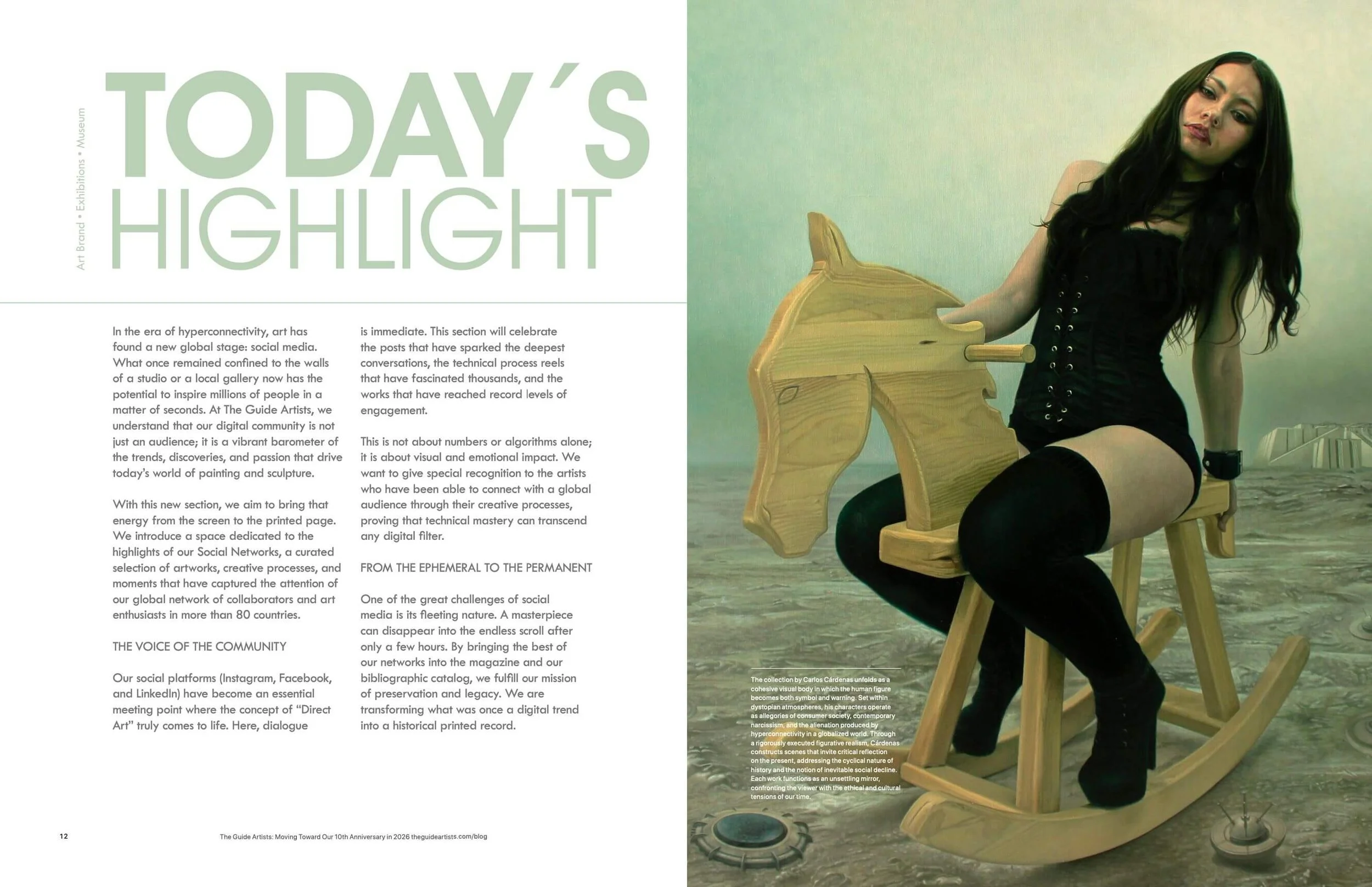
Spotlight on the Artist: Carlos Cárdenas
The Collection by Carlos Cárdenas unfolds as a cohesive visual body in which the human figure becomes both symbol and warning. Set within dystopian atmospheres, his characters serve as allegories of consumer society, contemporary narcissism, and the alienation caused by hyperconnectivity in a globalized world.
Through meticulously executed figurative realism, Cárdenas constructs scenes that invite critical reflection on the present, addressing the cyclical nature of history and the notion of inevitable social decline. Each work functions as a thought-provoking mirror, confronting viewers with the ethical and cultural tensions of our time.
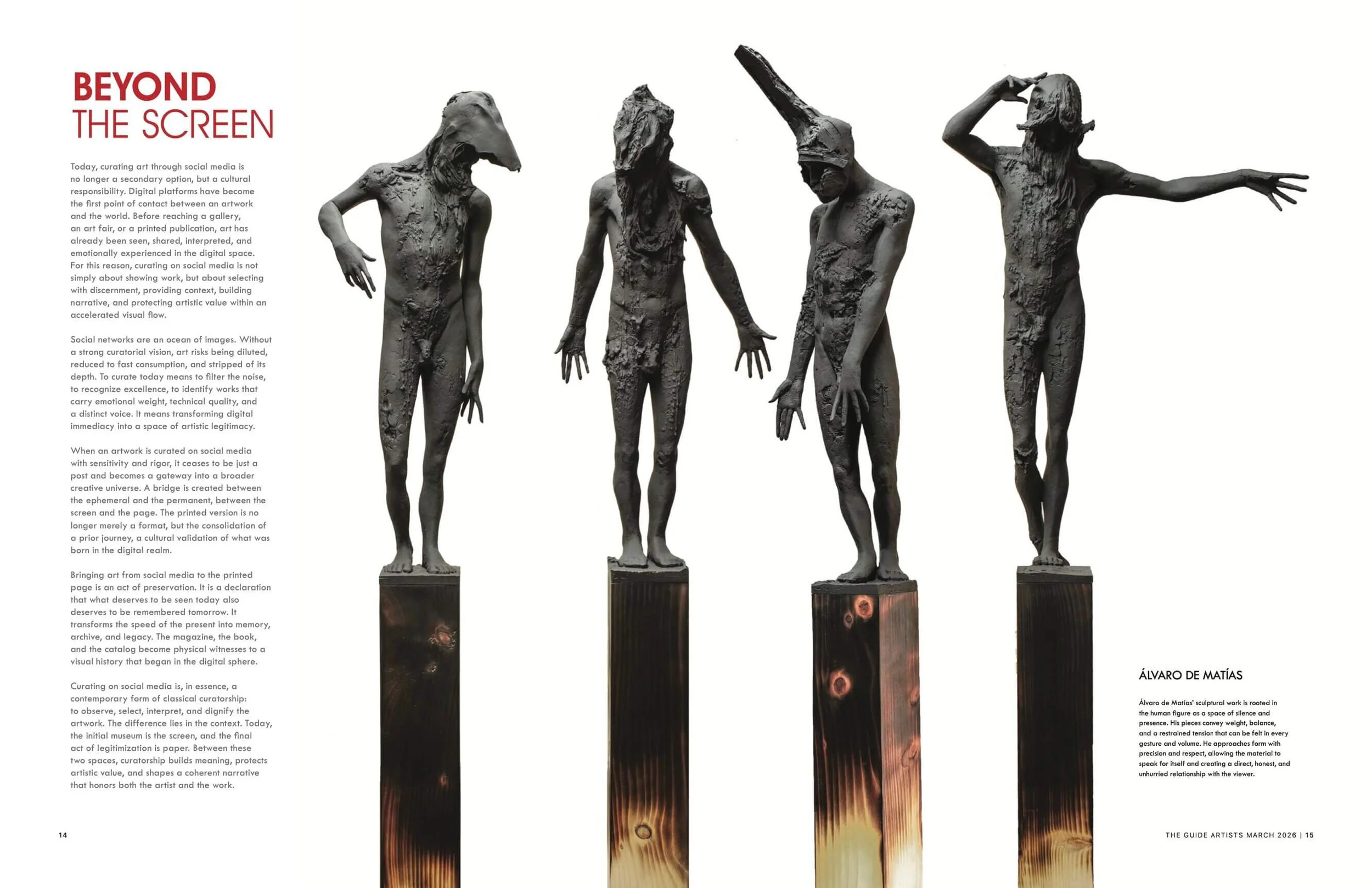
ÁLVARO DE MATÍAS
The sculptural work of Álvaro de Matías is rooted in the human figure as a space of silence and presence. His pieces convey weight, balance, and a restrained tension that can be felt in every gesture and volume. He approaches form with precision and respect, allowing the material to speak for itself and creating a direct, honest, and unhurried relationship with the viewer.
In his work, the body is not merely a form but a territory of introspection. The simplicity of gestures, the solidity of masses, and the stillness of poses invite the viewer to pause and observe closely. There is a pursuit of essentiality in his sculpture, where every formal decision is pared down to what is strictly necessary for the figure to breathe with authenticity.
The result is a sober and honest body of work in which the physical presence of the sculpture becomes an experience. Standing before it, the viewer senses something beyond form: a feeling of permanence, suspended time, and profound humanity.
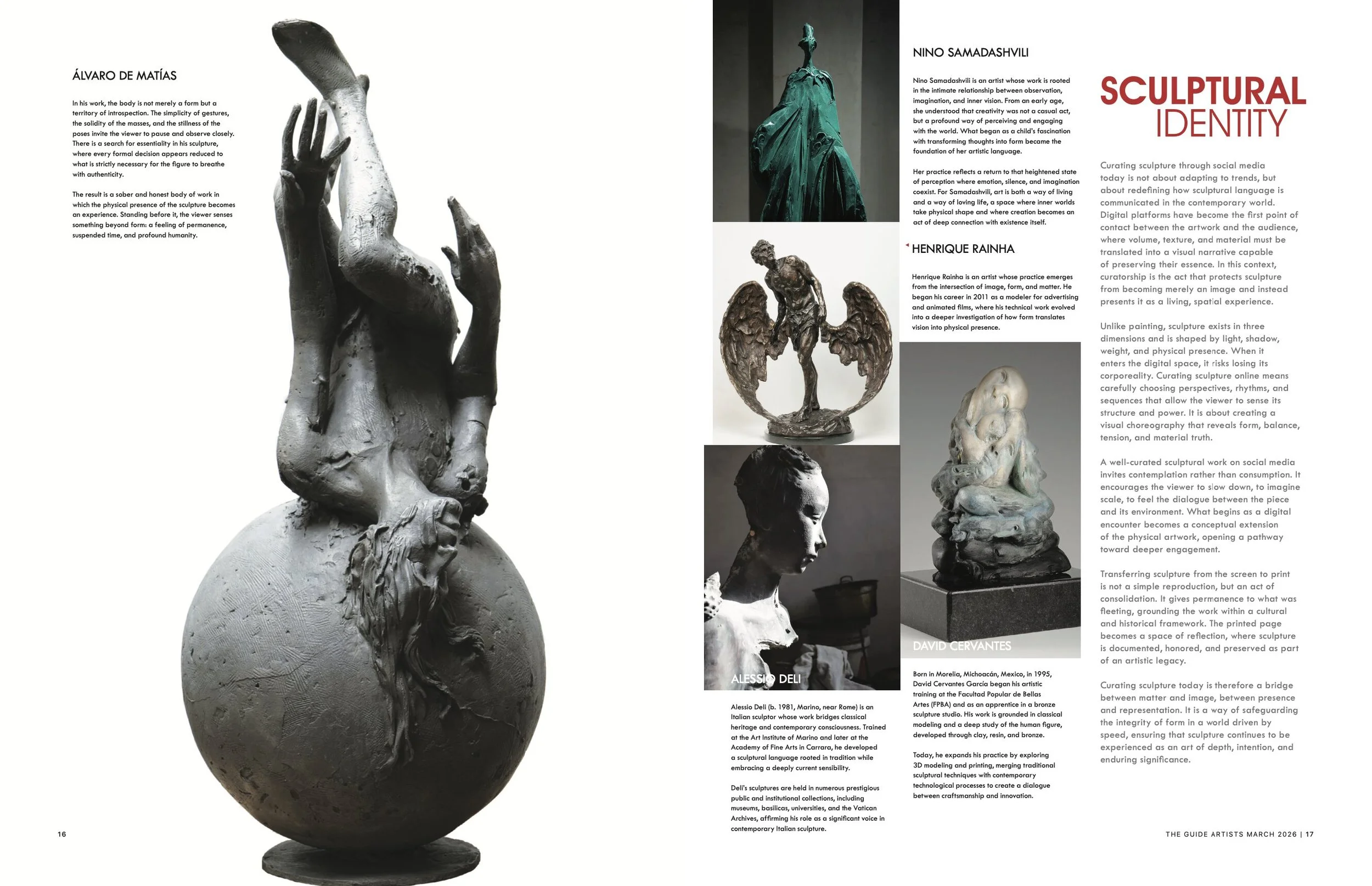
SCULPTURAL IDENTITY
Featured Artists
Our featured artists bring diverse visions and approaches to contemporary sculpture and visual art. Nino Samadashvili explores the intimate relationship between observation, imagination, and inner vision, transforming emotion and thought into physical form. Henrique Rainha works at the intersection of image, form, and matter, evolving technical expertise from animation and modeling into deeply considered sculptural presence. Alessio Deli (b. 1981, Marino, Italy) bridges classical heritage and contemporary sensibility, with works included in prestigious collections such as museums, basilicas, and the Vatican Archives. David Cervantes (b. 1995, Morelia, Mexico) blends classical human figure study with modern technology, using 3D modeling and printing to create a dialogue between traditional craftsmanship and innovation. Together, these artists exemplify the breadth and depth of contemporary figurative practice, combining tradition, imagination, and technical mastery to engage audiences worldwide.