Interview with Tomás Carlos Ortolani
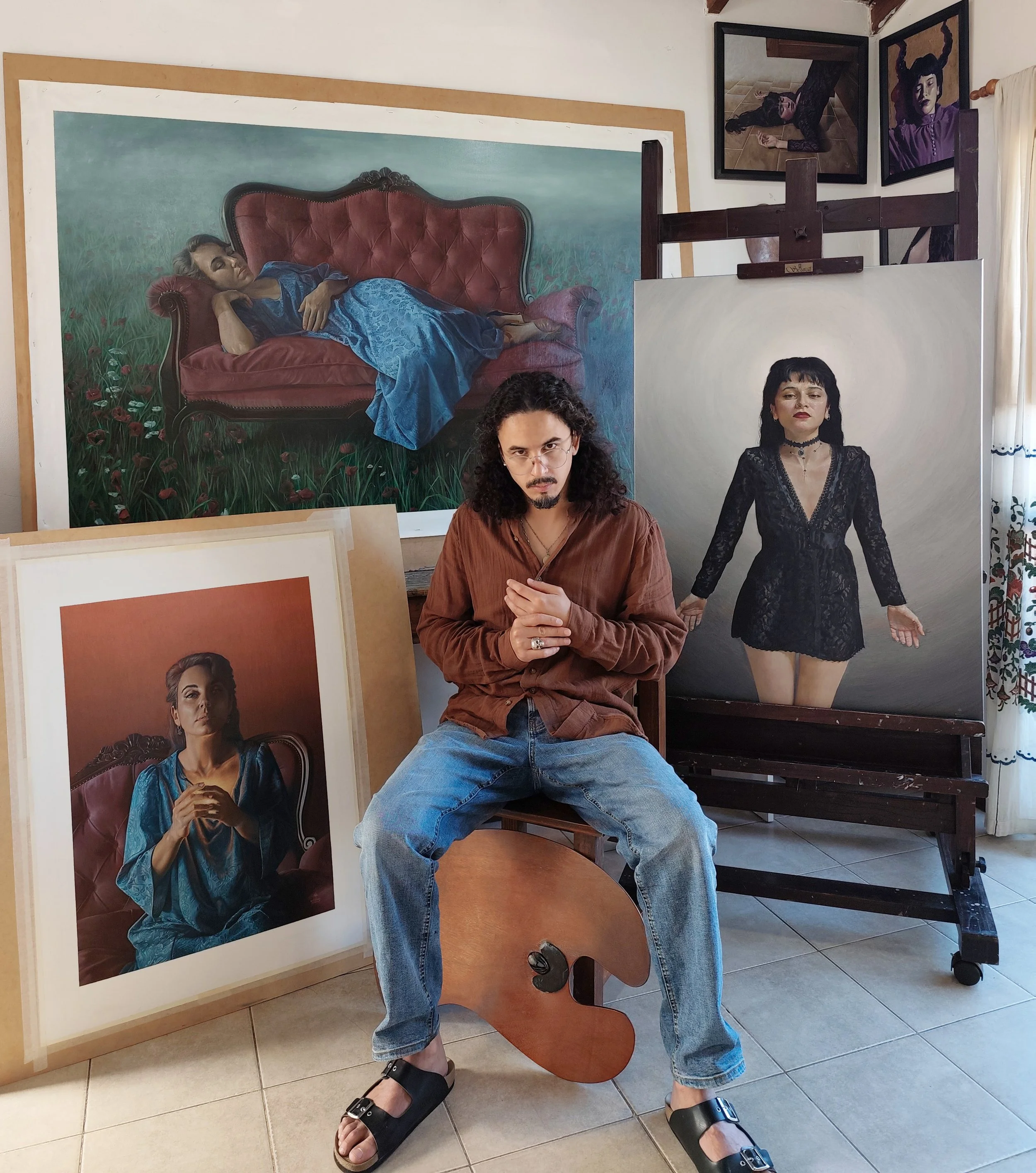
In this exclusive interview, we explore the artistic vision of Tomás Carlos Ortolani, discovering the inspirations, experiences, and creative philosophy behind his remarkable figurative paintings and symbolic visual language. Through this conversation, readers gain a deeper understanding of the ideas, emotions, and personal journey that shape his contemporary artistic practice.
Tomás Carlos Ortolani (born in 1992 in Mar del Plata, Argentina) is a contemporary figurative painter whose work bridges realism, symbolism, and the unconscious. After studying illustration and later specializing in realistic oil painting while pursuing Visual Arts at the National University of Córdoba, he developed a distinctive artistic language defined by technical mastery and psychological depth.
His work has been exhibited internationally through galleries in Argentina, Spain, and Canada, and is held in private collections across Argentina, Canada, Spain, and the United Kingdom. He has also participated in prestigious artist residencies in London, Italy, and Canada, enriching his creative vision through international exchange.
Inspired by dreams, spirituality, and personal experience, Ortolani creates paintings that invite viewers to explore the invisible dimensions of human consciousness. In this exclusive interview, we discover the inspirations, experiences, and creative philosophy behind his artistic journey, offering a deeper understanding of the vision that defines his contemporary practice.
Works for Sale
〰️
Works for Sale 〰️
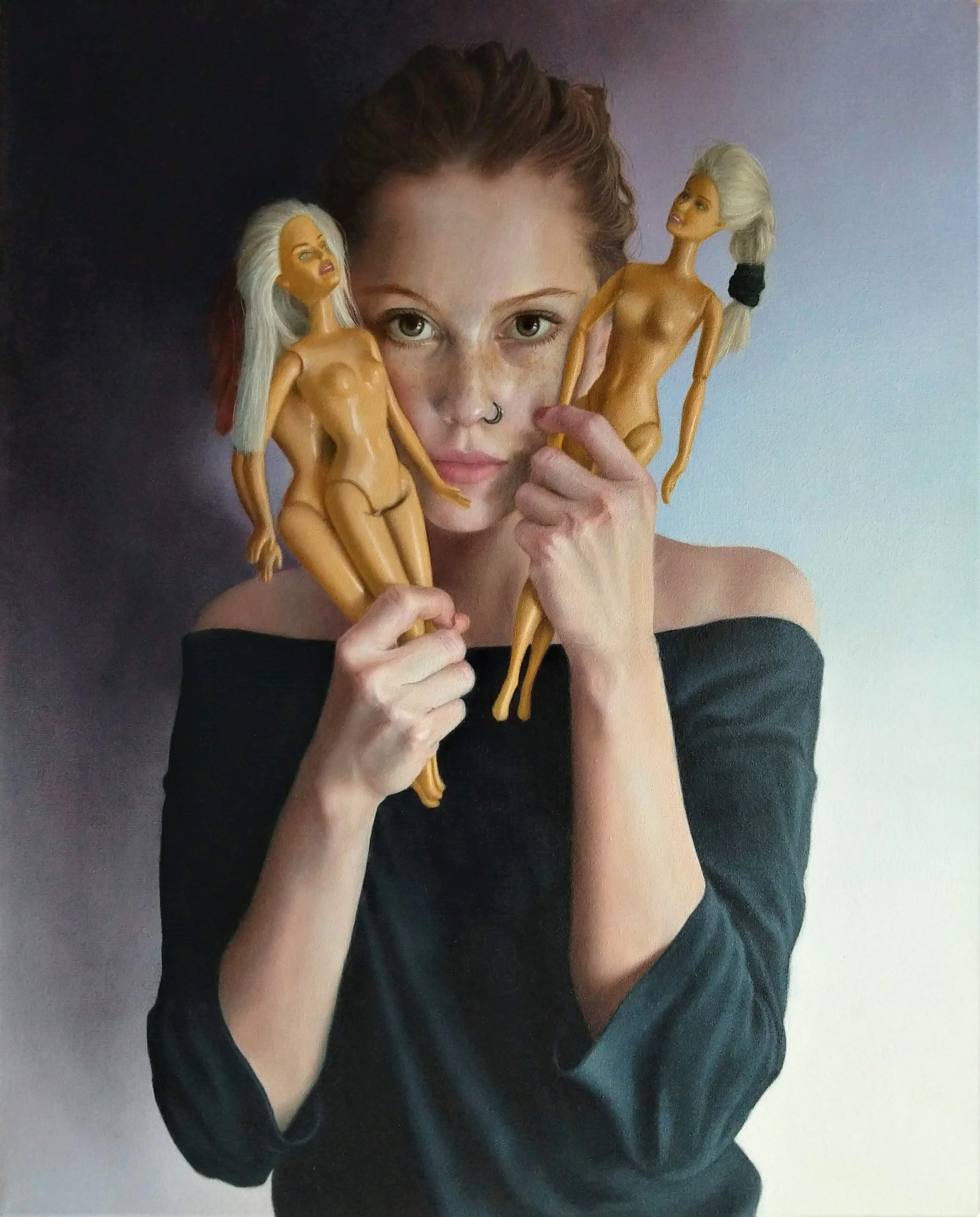
Identity
Oil on canvas
50 x 40 cm 2019
Price: 2.500 €
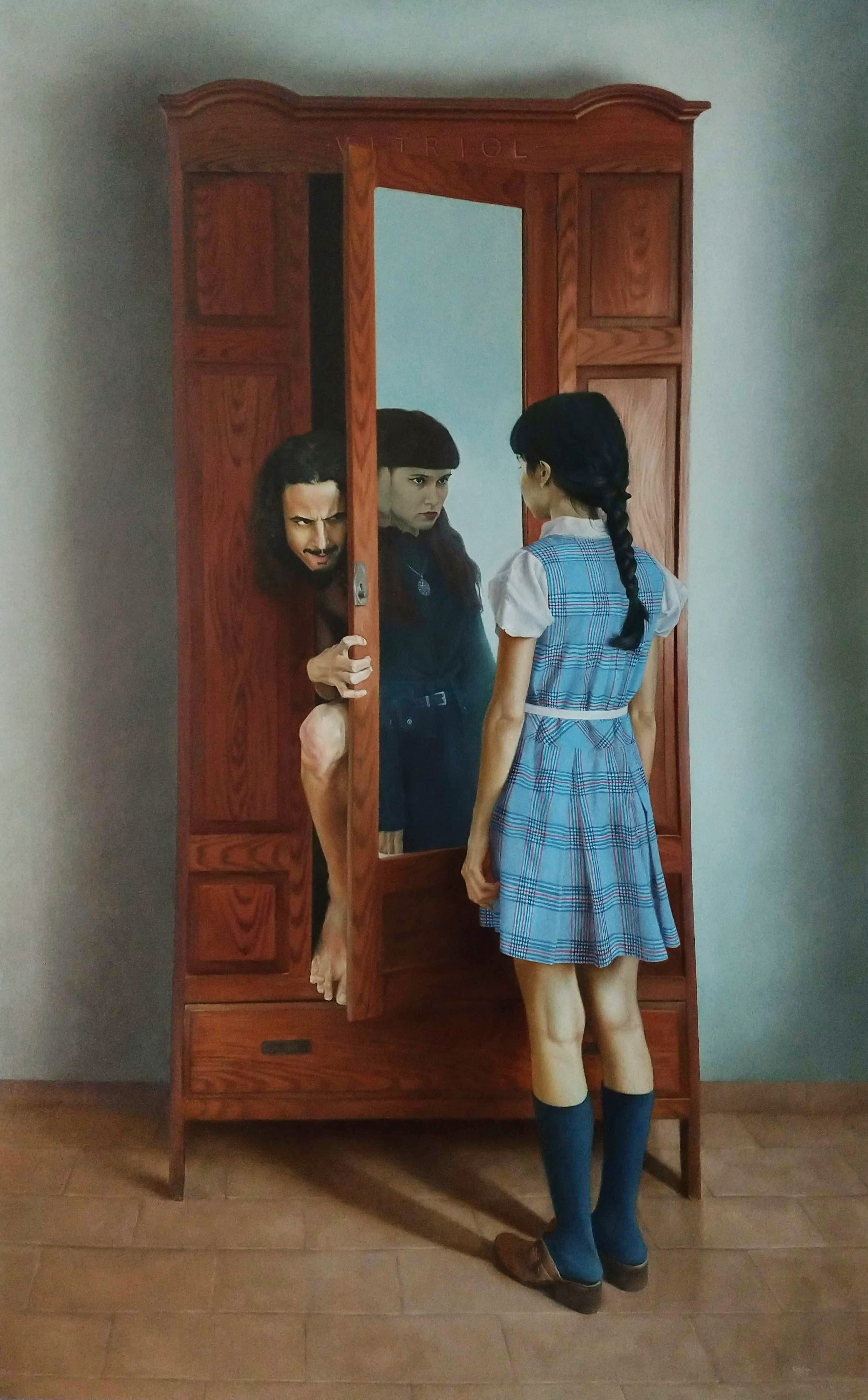
V.I.T.R.I.O.L.
Oil on canvas
160 x 100 cm 2021
Price: 7.000 €
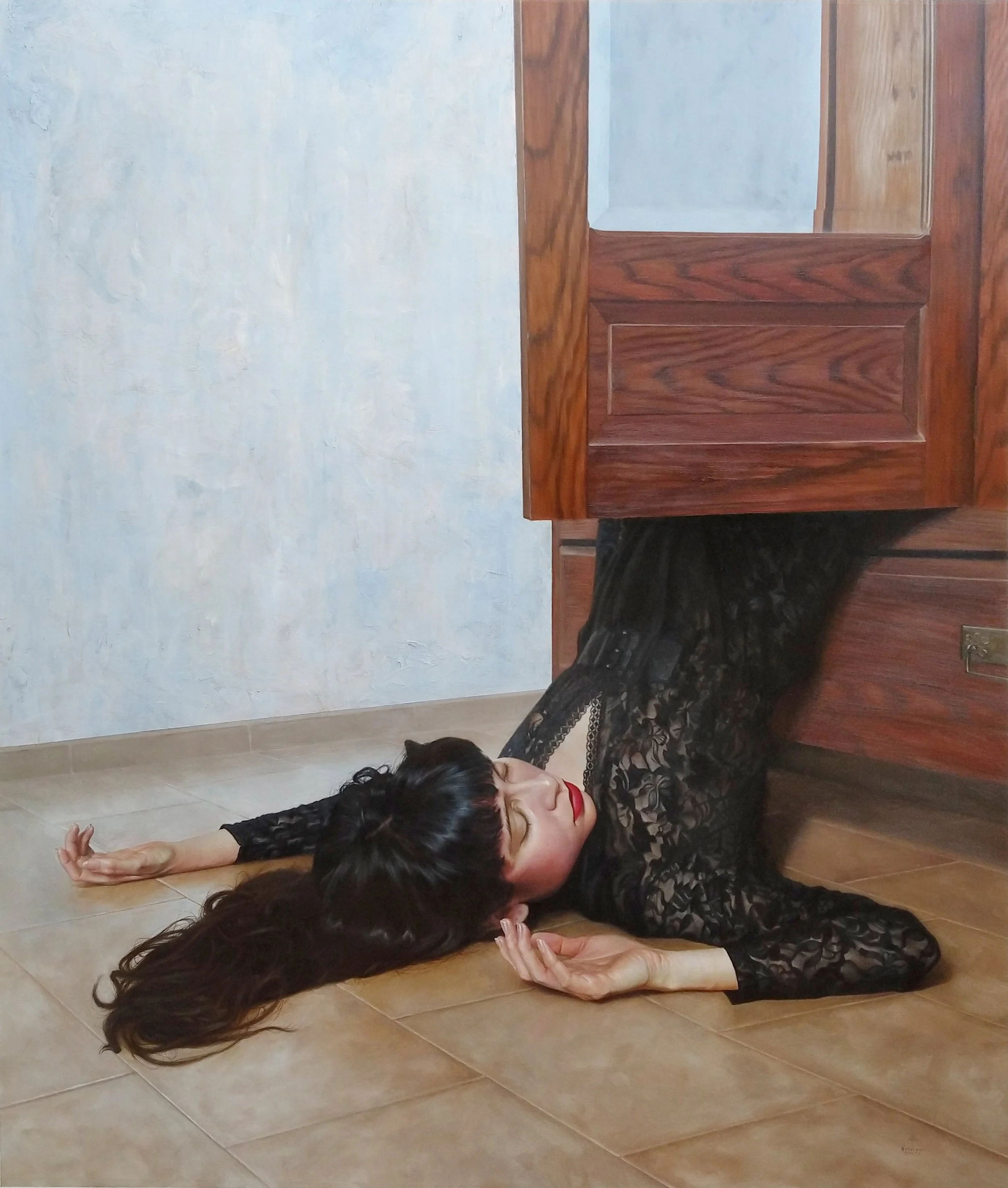
Solve
Oil on canvas
100 x 85 cm 2025
Price: 5.000 €
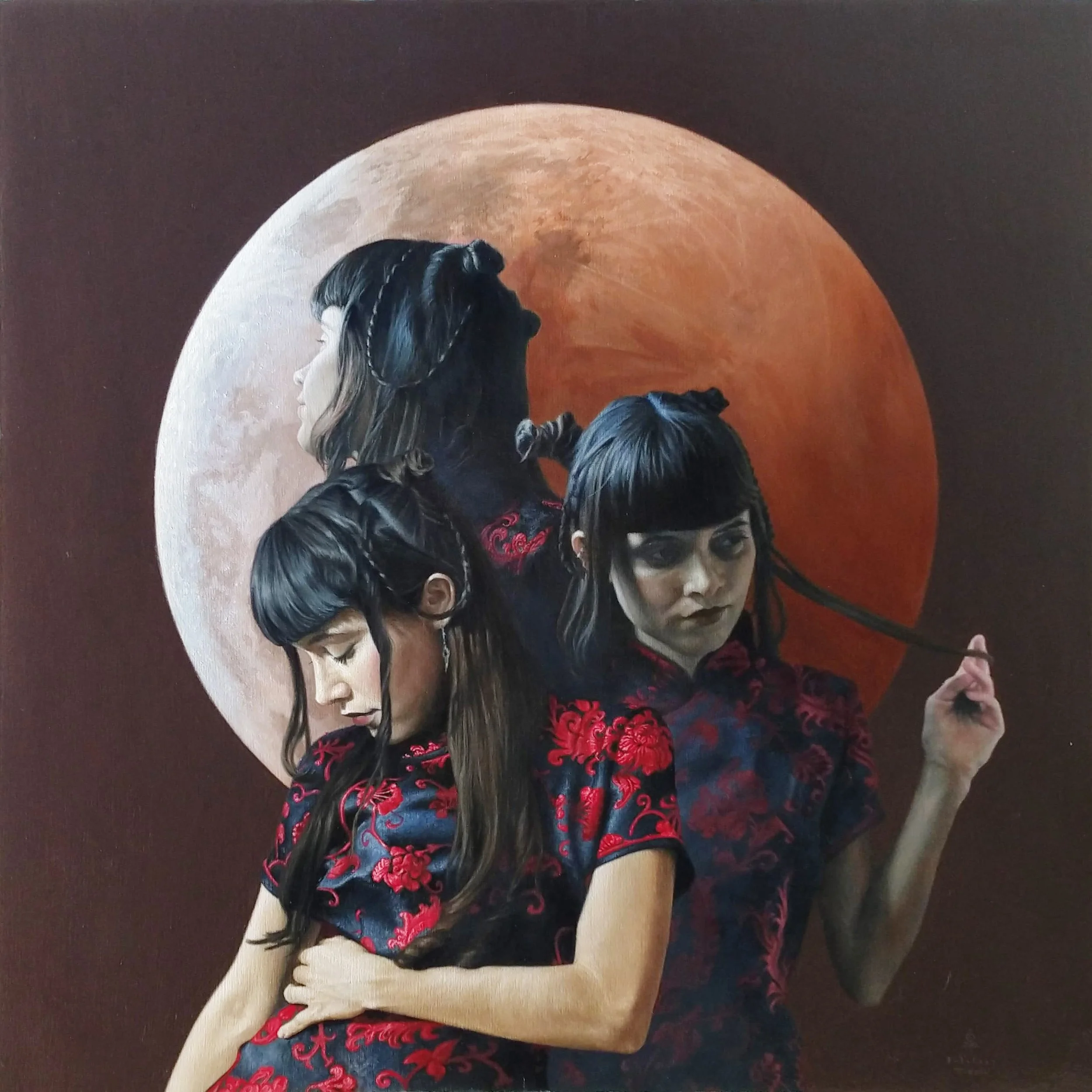
Eclipsed
Oil on canvas
50 x 50 cm 2024
Price: 3.000 €
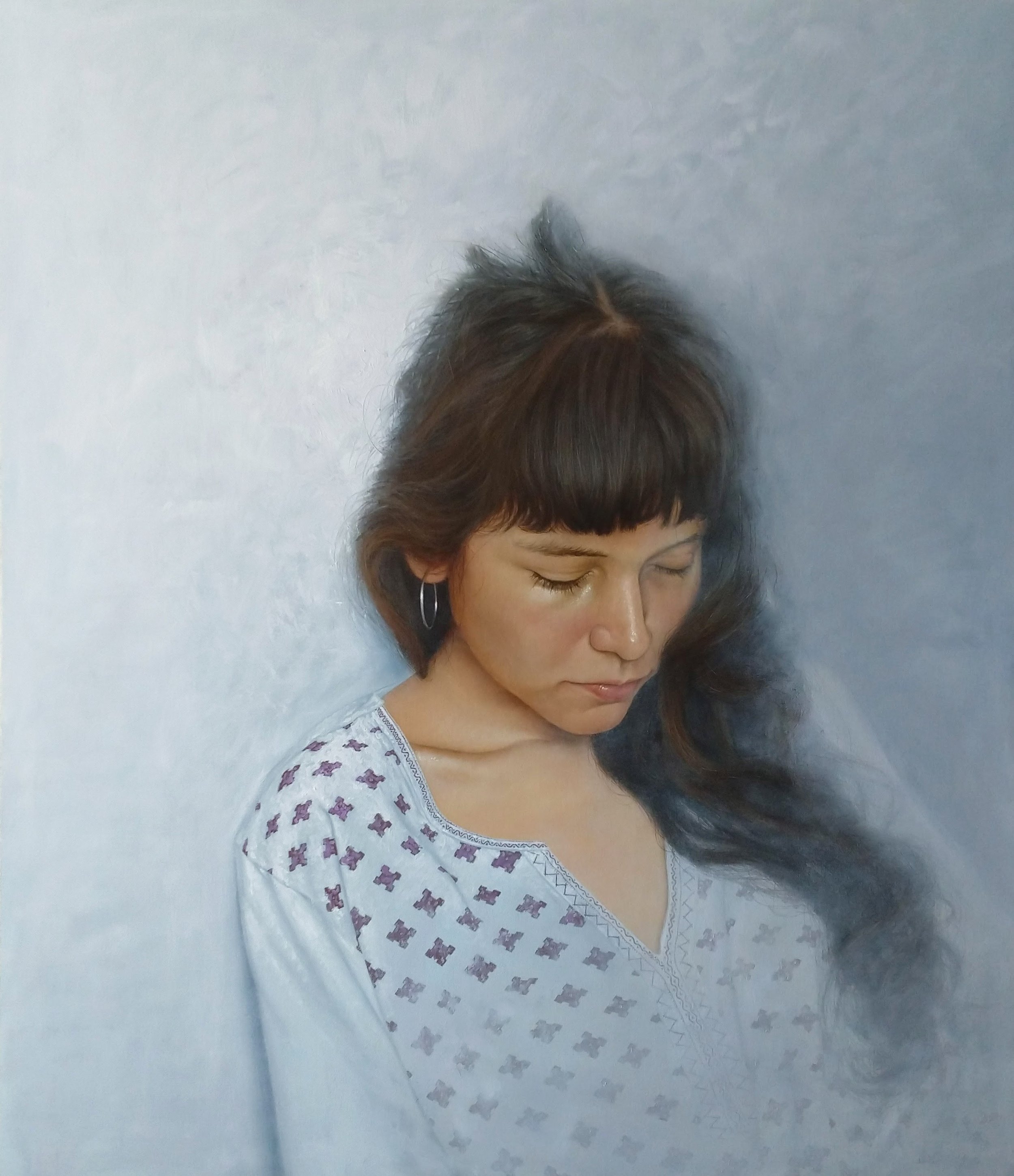
Yamila Resting
Oil on canvas
115 x 90 cm 2022
Price: 5.000 €
Interview
Interview
From your early fascination with cartoons and comic books to your specialization in realist painting, how would you describe the evolution of your artistic sensibility and the way you perceive and represent the human figure?
I believe that, as happens to many artists—and as I encourage my students to experience—this evolution occurred gradually, but with a deliberate intention to explore both ends of what we might call figurative art. On the one hand, I sought to refine my attention to detail through form and color; on the other, I wanted to strengthen the essential simplicity of the pictorial structure. It is a continuous process of pulling and pushing, holding on and letting go, among many other possible metaphors.
At first, without being fully conscious of it, and now with greater awareness, the subject of each painting has always represented something about me. Painting has helped me understand what I was experiencing and how I was feeling. At the same time, the way I constructed the figure also revealed how I understood myself.
In my early work, I approached the human figure through an idealized model, guided by particular standards of beauty and established rules. The results were often closer to illustration than to realist or naturalistic painting. Looking back, I associate that approach with a similarly idealized understanding of myself—one shaped by stereotypes, expectations, and imposed standards.
I am not suggesting that my current work follows no rules. Rather, the principles I respect have changed throughout my development, reflecting changes in the way I understand myself and, consequently, the world around me.
Today, I approach the figure with a much more critical—and hopefully more objective—eye. I respect detail, but I try not to give it so much attention that I lose sight of what is happening across the work as a whole. That overall structure is ultimately what matters most and what sustains the painting.
In 2016, you moved to Córdoba, Argentina, and began specializing in realist painting while attending workshops led by different artists. What motivated you to take that step, and which lessons or experiences from that period remain fundamental to your practice today?
Until shortly before that time, I had never met any figurative artists. I was only familiar with illustrators, so my professional ambitions did not extend much beyond creating a comic-book cover or having a booth at a convention. In fact, while working as an illustrator, I also attempted to study subjects such as architecture and economics, but neither path worked out.
In 2015, I decided to study Visual Arts in the city of Córdoba because I had been told that the National University of Córdoba was one of the best institutions in the country in that field. That assessment was probably correct, but the program was not necessarily what I had been looking for. I arrived expecting something closer to a traditional art academy, when the reality was quite different.
Because I should have enrolled at the end of the previous year, I had to wait until the following year to move. During 2015, I studied classical drawing and oil painting with Damaris Berra Menéndez, who had been a student of Martín Llamedo in Buenos Aires. She introduced me to an entire world of figurative art, realism, hyperrealism, and related approaches. That was the moment when I thought, “This is the direction I want to follow.”
It is important to understand that Mar del Plata does not have many major art galleries, and Visual Arts can only be studied there at a tertiary-level institution. In many ways, it feels like a large town. I mention this to provide some context for how limited my understanding of contemporary realist painting was at that time.
Once I became a student at the National University of Córdoba, I also attended realist oil-painting classes at Juan Manuel Jaimes Roy’s studio. There, I consolidated essential concepts regarding the use of materials and began to understand more clearly how the art world and gallery system operate.
Your work has been exhibited in galleries in Argentina, Spain, and Canada and is held in private collections across several countries. How does knowing that your work crosses borders and reaches diverse audiences influence the way you create?
When I began working regularly with galleries abroad, the first thing I considered was how the paintings would be shipped and how that would affect my production. Planning works measuring less than half a meter is very different from producing paintings more than two meters wide.
The same issue arose when I began participating regularly in painting competitions and exhibitions that required the selected work to be shipped. Since then, I have chosen to purchase entire rolls of pre-primed canvas without stretching them onto frames. I place the canvas over large wooden panels while I work.
This method allows me to choose the dimensions freely, without being limited by an existing stretcher or having to commission one in advance. It also eliminates the natural bounce of a canvas suspended in the air. Instead, I work against the rigid surface of the wooden panel beneath it, something I have become very accustomed to over the past few years.
Those considerations mainly concern materials and logistics. In terms of subject matter and form, I do not believe there are major differences because the themes I address tend to be universal.
There may be exceptions involving particularly personal works that do not align with the cultural sensibilities of more conservative countries. So far, however, that has not been an issue, and I do not expect it to become one. I aim to develop a visual language that is as universal as possible, especially now that I am fully aware of how far my work can travel.
You have participated in artistic residencies in London, Italy, and Canada. How have these international experiences transformed your approach, technique, or understanding of art and artistic creation?
Each residency gave me something different, both because of its particular nature and because of the stage of life I was experiencing at the time.
In London, I participated in the Griffin Art Prize residency program through Winsor & Newton and Colart. I visited many artists’ studios and attended several gallery openings. London’s art world is immense, as is the diversity of art produced and exhibited there.
It was my first serious, firsthand encounter with art beyond figurative painting. That experience encouraged me to question my own work on an intellectual level and to enrich it through ideas, concepts, and discourse.
I also had the opportunity to receive mentorship from José Carlos Naranjo, visit his studio, and benefit from his guidance. In addition, I was fortunate enough to visit the National Gallery. Although that was not strictly part of the residency, anyone who has visited London knows that it is an experience that cannot be overlooked.
In Bologna, through the Ottovolante association, the experience was far more culturally focused. We visited only a few galleries, allowing us more time to explore towns throughout the region and discover their most significant landmarks.
Castles, medieval villages, and the opportunity to live and work alongside descendants of Italians based in Uruguay, Brazil, Chile, and Argentina made the experience especially meaningful. The participating artists worked not only in the visual arts but also in music and theater. It became a process of learning and personal growth centered on cultural exchange, collaboration, human connection, and teamwork.
Canada offered a completely different environment. I met other artists participating in the residency from Canada, Germany, Ukraine, and elsewhere, but the experience was primarily focused on production.
At the time, I was represented by James Baird Gallery, which managed the Pouch Cove residency program, and this greatly influenced the working atmosphere. As beautiful as the surrounding landscape was, Pouch Cove is a very small community on an island. The weather—it was the middle of winter and everything was covered in snow—did not encourage much outdoor exploration. Remaining indoors and concentrating intensely on the work became almost inevitable.
That experience also gave me a deeper understanding of how galleries operate commercially.
Your practice centers on figurative oil painting. How would you describe your creative process from the initial idea to the finished work, and how do you balance technique, visual narrative, and the emotions you wish to communicate?
The process is not always linear. Sometimes an idea leads me to take action, while at other times an external element inspires me to create something from it.
I often draw inspiration from books or podcasts about esoteric subjects, as well as dreams, films, and fantasy or horror series. There is always a sketch, although it may be relatively vague, that serves as a starting point for the photographs I later use as references.
I generally create digital compositions without significantly altering the color because I prefer to make those decisions directly through paint. The same applies to projected shadows and areas of blur.
I usually try to bring the first layer of paint as close as possible to the final result so that fewer adjustments are required later. I feel that this allows the work to progress more quickly, although building multiple layers of paint can sometimes produce a richer and more interesting physical surface.
At the same time, both between different series and while developing them, I continue experimenting with materials I have acquired over the years and exploring new ways of using them. The material investigation never stops.
Recently, for example, I have been experimenting with iridescent paint and microglitter, attempting to create genuine reflective and color-shifting effects within the physical surface of the work rather than merely producing the illusion of them through paint.
In addition to developing your own work, you teach people who want to improve their visual-art skills. How does teaching influence your artistic development and the way you approach new work?
It is often said that the teacher is the person who learns the most, and I am no exception. The student makes an effort to understand the concepts, but I must also work hard to make myself understood.
During that process, I have to change my own way of thinking, approach a concept from a different perspective, and find new ways to explain ideas that I have already internalized. The person who undergoes the greatest internal transformation is often the one doing the explaining.
We should also remember that the painter’s work is extremely solitary. Without my students, my social circle would probably be much smaller.
I am fortunate to have highly capable students in my studio. They do not make my work particularly difficult; in fact, they make the entire experience very enjoyable. Conversations also constantly emerge around the concepts that both they and I are exploring in our respective work. These discussions inspire us and generate new ideas and perspectives on a wide variety of subjects.
Throughout your career, you have undoubtedly faced challenges and periods of intense creative exploration. Could you share an especially significant experience that marked a turning point in your artistic journey?
I am actually experiencing that turning point right now.
Since returning to Mar del Plata in 2023, I have been painting many experimental works. I have explored abstraction, textures, contrasts, varied color palettes, and improvised figures created without photographic references.
My final experience with the Canadian gallery was highly commercial—which was not necessarily a negative thing—but it led me to question, at a fundamental level, why I paint.
When I was a child, drawing was always connected to the validation of others. It was what distinguished me, and my identity was entirely associated with being able to paint and with feeling different from everyone else.
Perhaps not everything has changed. I believe that any artist exists somewhat outside the conventional life of a person with an average routine. Although we may establish schedules for painting, working in the studio, and teaching, we never entirely stop being bohemian.
However, the distinction associated with how “well” a work has been painted, the validation that comes from becoming a finalist in a competition, or the need to identify oneself primarily as an artist no longer carry the same weight for me—or at least I hope they do not.
Returning to settle in my hometown seems to have touched something sensitive from my childhood, and I have started playing with colored pencils again, just as I did when I was young.
At the same time, I want the process to feel clear and the transition to be coherent. Perhaps I am also afraid of making such a dramatic change that the work no longer feels like me, because I still identify strongly with everything I have painted until now.
Whatever the reason, I have been introducing new elements into my most recent work. I am trying to move gradually toward the freedom I deeply desire so that I can express myself more fully.
Looking toward the future, which projects, techniques, or themes would you like to explore, and how do you envision your artistic evolution over the next several years, both personally and professionally?
I have many projects waiting to be developed, which is one of the reasons I would like to paint more quickly. Most of them involve dreams, visions experienced during meditation, or metaphysical concepts transformed into entirely surreal metaphors.
I believe the most significant aspect of this change will be material. I want to explore techniques in which texture and physical matter play a much more important role.
At a certain point, realism can become a prison. I want to have the courage to say, “This is enough. Not everything needs to be so detailed.” Then, however, the little voice returns and says, “But that is not finished. Do it properly.”
The day I stop feeding that inner voice, a major transformation will take place.
To illustrate what I envision through the work of other artists—or to describe my current horizons and the direction I would like to pursue—the first names that come to mind are Gustav Klimt, Piró, also known as Pino Rosetti, Aleah Chapin, Oleksii Shcherbak, Ron Hicks, Alex Grey, Hilma af Klint, and Claude Monet, among many other classical and contemporary artists.
I understand that this may sound like an unusual combination, but within my vision of how I expect to paint in the near future, everything fits together very naturally.
I have several notebooks filled with records of dreams and ideas. The drawings are created with metallic pencils, oil pastels, charcoal, and red chalk. Sooner rather than later, all of that material will come to light.
I have often felt that my work lacks unity and that each painting exists in isolation from the others. That perception usually changes when I see the works together and begin to recognize different series—although they are not necessarily series in the strictest sense.
Another change I would like to make is to organize the works from a specific period into a clearly defined series before beginning production. Ultimately, I see myself breaking down structures within the paintings themselves while strengthening the structures behind their planning.
On a personal level, I would also like to make more time to read my favorite authors. Although I have already read many of the books in my collection, the list of those still waiting remains extensive.
René Guénon, Jesús Zatón, Dr. Adolfo Weiss and his book Rational Astrology, Ada Albrecht, and Ananda Coomaraswamy are among the many authors waiting in my library. Their ideas will continue to nourish my inner world and, eventually, flourish through new works.
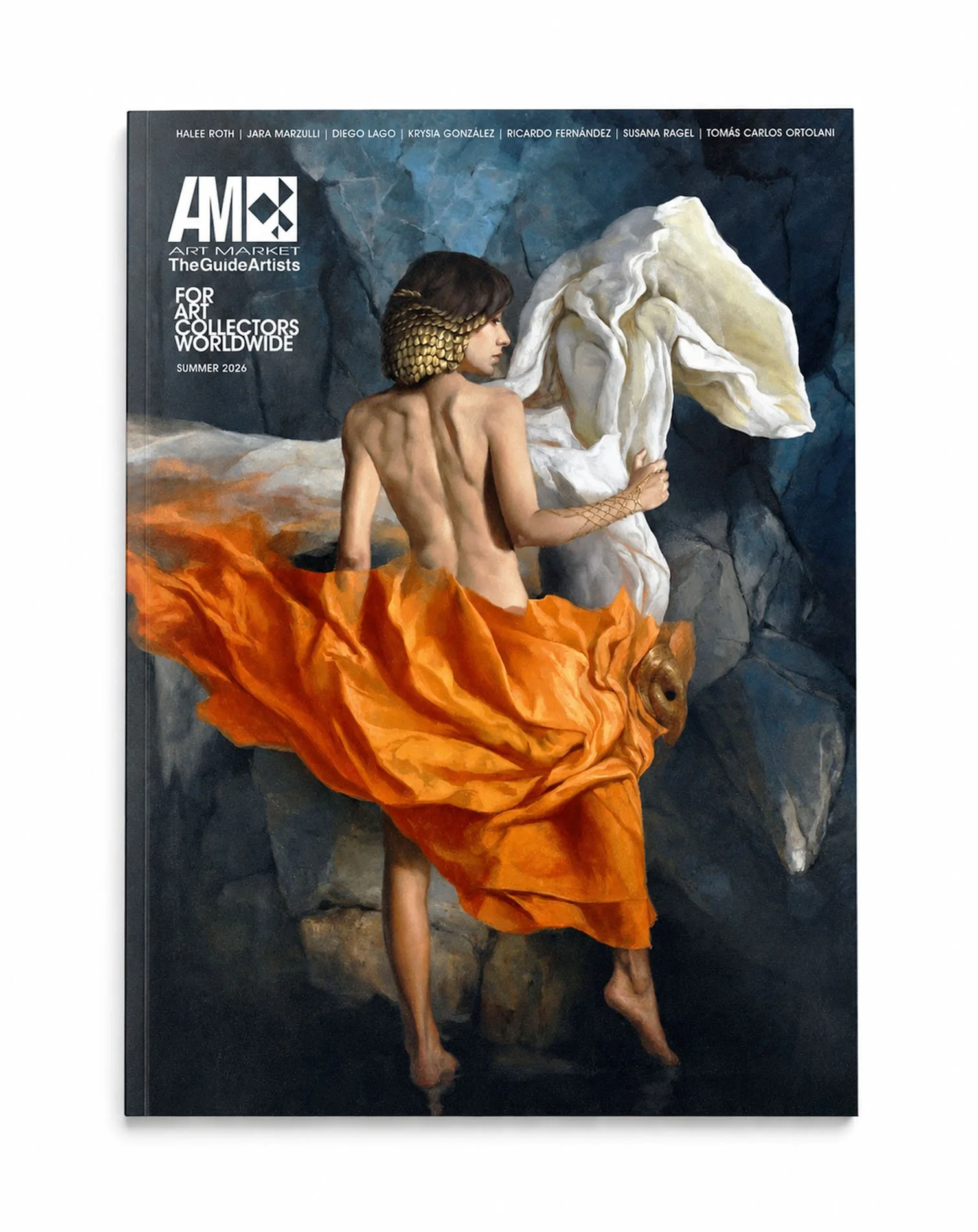
This June, The Guide Artists presents the summer edition of its International Art Market Catalogue, a physical and digital publication created to connect artists with collectors, galleries, museums, art brands, hotels, interior design spaces, and selected cultural environments worldwide.
More than a catalogue, this new edition is conceived as a refined platform for art: a carefully curated publication where each artist can present their work with elegance, visibility, and a direct connection to the international art market.
Released each season, the catalogue brings together a distinguished selection of artists whose works reflect identity, technique, visual strength, and a unique artistic vision. Our purpose is to offer a serious and professional space where art can be discovered, promoted, collected, and experienced beyond the traditional limits of a publication.
At The Guide Artists, we continue to work under the spirit of our slogan:
“Discovering and presenting the finest artists of our era.”
With the wonderful cover by Ricardo Fernández Ortega, this summer edition will feature paintings and sculptures by:
Brett Andrus, Benito García, Carlos Cárdenas, César Alejandro Sánchez, Diego Lago, Dorielle Caimi, Edith Ruiz, Eduardo Landa, Elleny Gherghe, Emiliano Lovera, Halee Roth, Jara Marzulli, Jared Guerra Mirabal, Kevin Slaby, Krysia González, Manuel Martí Moreno, Marcos Lozano Merchán, Melissa Antúnez, Raúl Aboytes Chavez, Paco Martín, Susana Ragel, Tomás Carlos Ortolani, Zayda Anahí Ascencio Pérez, C.Leg, Panos Kampylis, Hiroshi Hayakawa, Sofia Ruíz and many more.