In Conversation with Iryna Götz: Insights and Inspiration
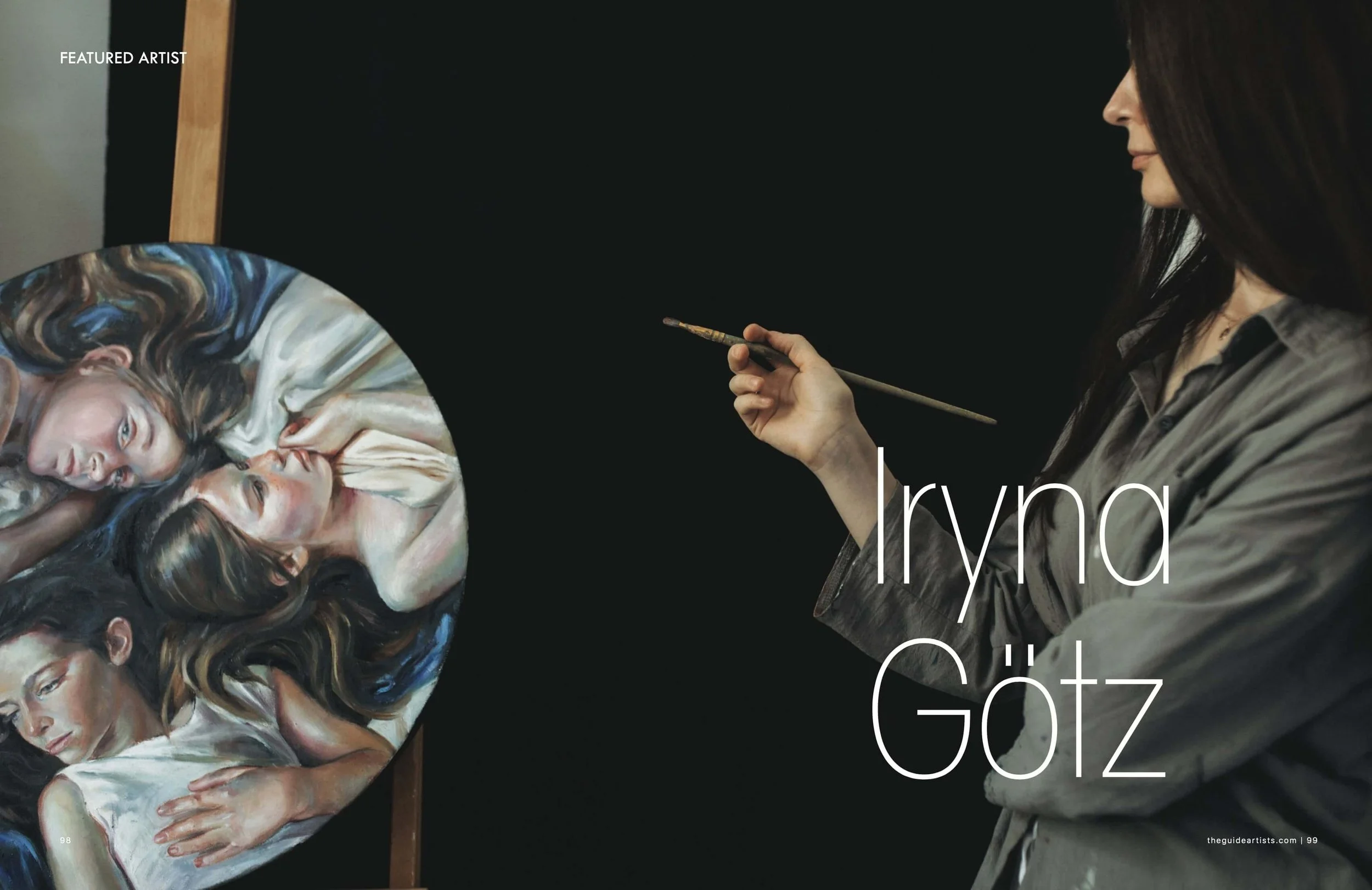
Exclusive Interview with Iryna Götz
Born in 1988 in Lutsk, Ukraine. Lives and works in Erfurt, Germany.
Educated at the National University of Volhynia (2005–2010), where she earned a Master’s degree in Fine and Decorative Applied Arts, Iryna Götz has developed a distinctive figurative language rooted in emotion, memory, and psychological depth. Her work explores the subtle border between innocence and experience, often through the depiction of female figures imbued with a quiet intensity.
Since 2014, she has been a member of the Association of Visual Artists Thuringia (VBKTh), and since 2016, she has served as lecturer and course leader at the IMAGO Art School in Germany.
Her talent gained early international recognition with first prizes at Art Week St. Petersburg and Art Week Venice in 2014, followed by participation in the Premio San Crispino in Italy and Andrej Smolak’s global cultural project The Painted Equator in Slovakia.
How did your relationship with painting begin, and what memories do you have from your early training years in Ukraine?
Growing up in a strict religious family, painting and music became my personal spaces for self-expression. I was good at drawing in school, and music came easily to me, but I was afraid of performing in public, so I focused on painting. After school, I continued studying art at university. Looking back, I realize I could have made even better use of that time.
What motivated you to move your life and artistic career to Germany?
I moved to Germany at the age of 20, driven by love and a relationship. It was a wonderful time for change. In Ukraine, I studied classical figurative art, but in Germany I encountered a more experimental and free approach, which was confusing at first. Yet deep down, Germany felt like my country.
In 2014 you received important international awards in St. Petersburg, Venice, and Italy. How did those recognitions shape your career?
At that time, I was working extensively with glass painting, a historic technique rarely practiced in Germany. International competitions recognized my work, even though transporting glass was risky and sometimes led to damage. That experience was invaluable.
You also took part in the cultural project The Painted Equator. What did it mean to you to be part of such a global initiative?
For me, participating in the project was symbolic. Small pieces of art from around the world came together
to form a whole, reminding us of the global dialogue among artists.
Between 2023 and 2024, you held several solo exhibitions in cities such as Erfurt, Göttingen, and Eisenach, in addition to participating in international fairs and events. Which of those experiences has been the most meaningful for you?
2023 was a turning point. Previously, I had experimented with different art forms, from book illustration to creating an accessory brand, but my first exhibitions completely changed my mindset. The international competition in Vienna stands out in particular, where each artist had the opportunity to fully present their work.
In 2025, you are participating in MEAM-HALL in Barcelona. What does it represent for you to showcase your work in such a landmark space for figurative art?
At first, I couldn’t believe it was happening. Later, I learned that one of my large paintings would also go to Madrid. If art were a religion, MEAM would be its temple. This place has given me so much knowledge and many new connections.
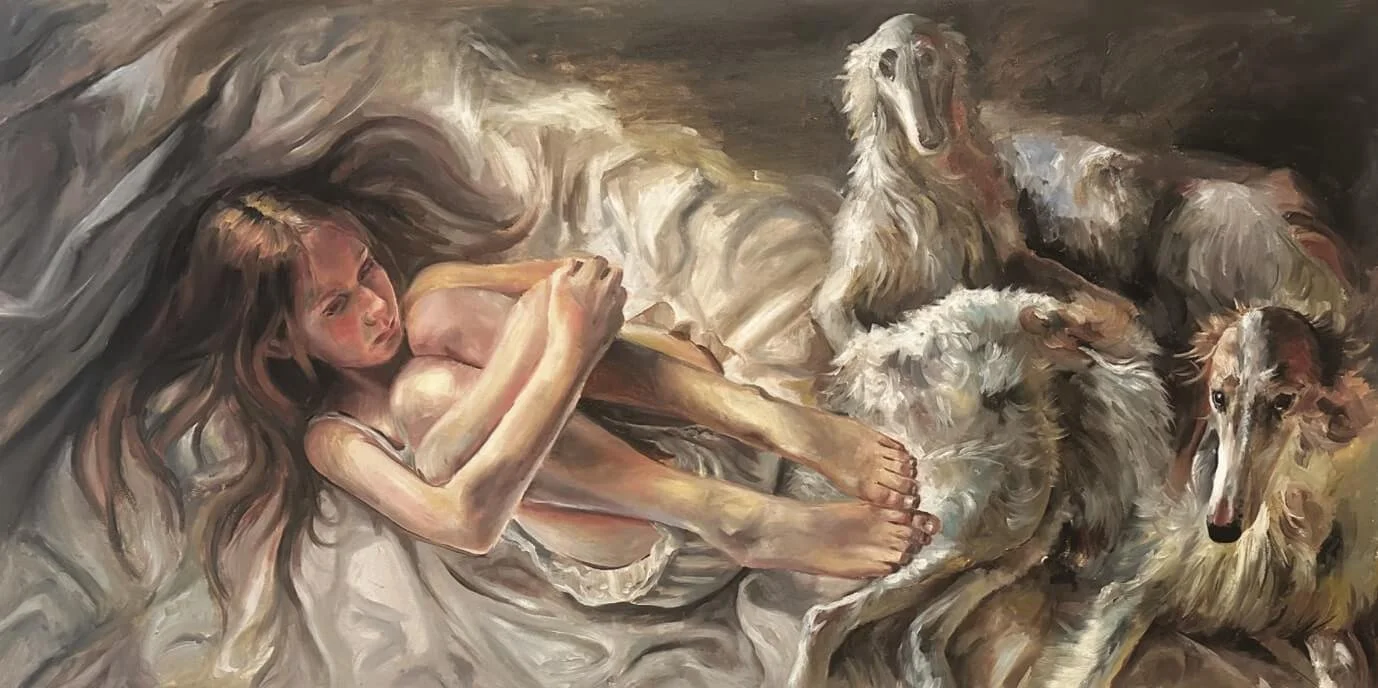
Your paintings often portray female figures imbued with psychological intimacy. What do you wish to convey through these images?
These works are memories from my childhood, spent surrounded by nature and animals, where the perception of life was raw and direct. As children, we could see how an animal carcass was processed, and it was understood as a normal cycle of life, not cruelty. I explore this partly in my painting Flesh. The main characters in my paintings are children and teenagers because they are more interesting to depict—they are genuine, slightly awkward, and unpretentious. I’m fascinated by the transition from childhood to adulthood, which I consider the most intriguing period in life.
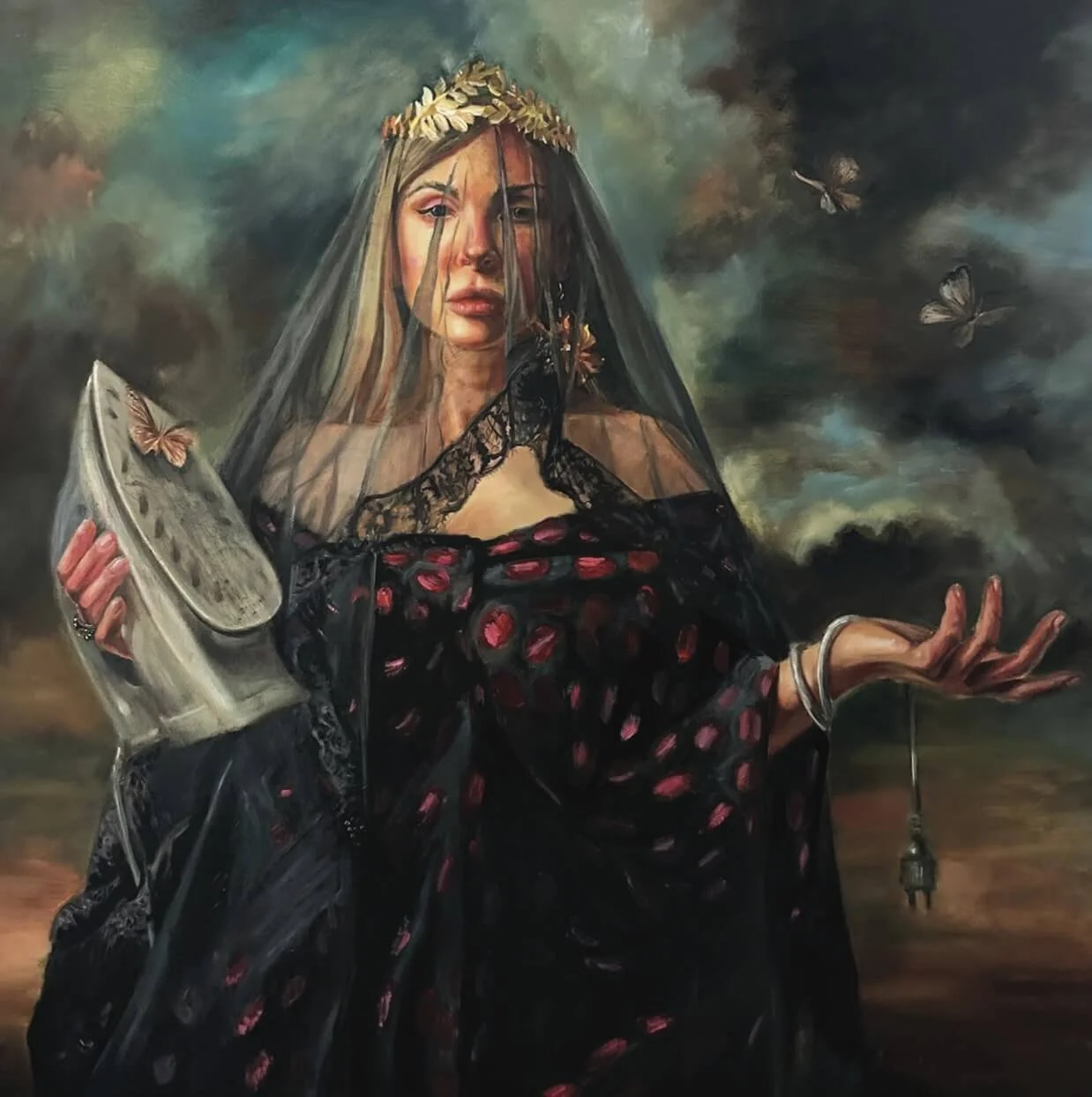
Your 2025 work The Butterfly Catcher reflects a poetic and enigmatic atmosphere. What is the story behind this piece?
The painting is about allowing yourself to be a little strange sometimes. Viewers are surprised by the iron, which turns out to be a tool for catching butterflies. It’s a metaphor suggesting that unusual methods can lead to unexpected results.
Since 2016, you have been teaching at the IMAGO school. How does your role as an educator influence your creative process?
I teach both children and adults, and I have always loved teaching. It allows me to share knowledge with others while also analyzing myself in the process.
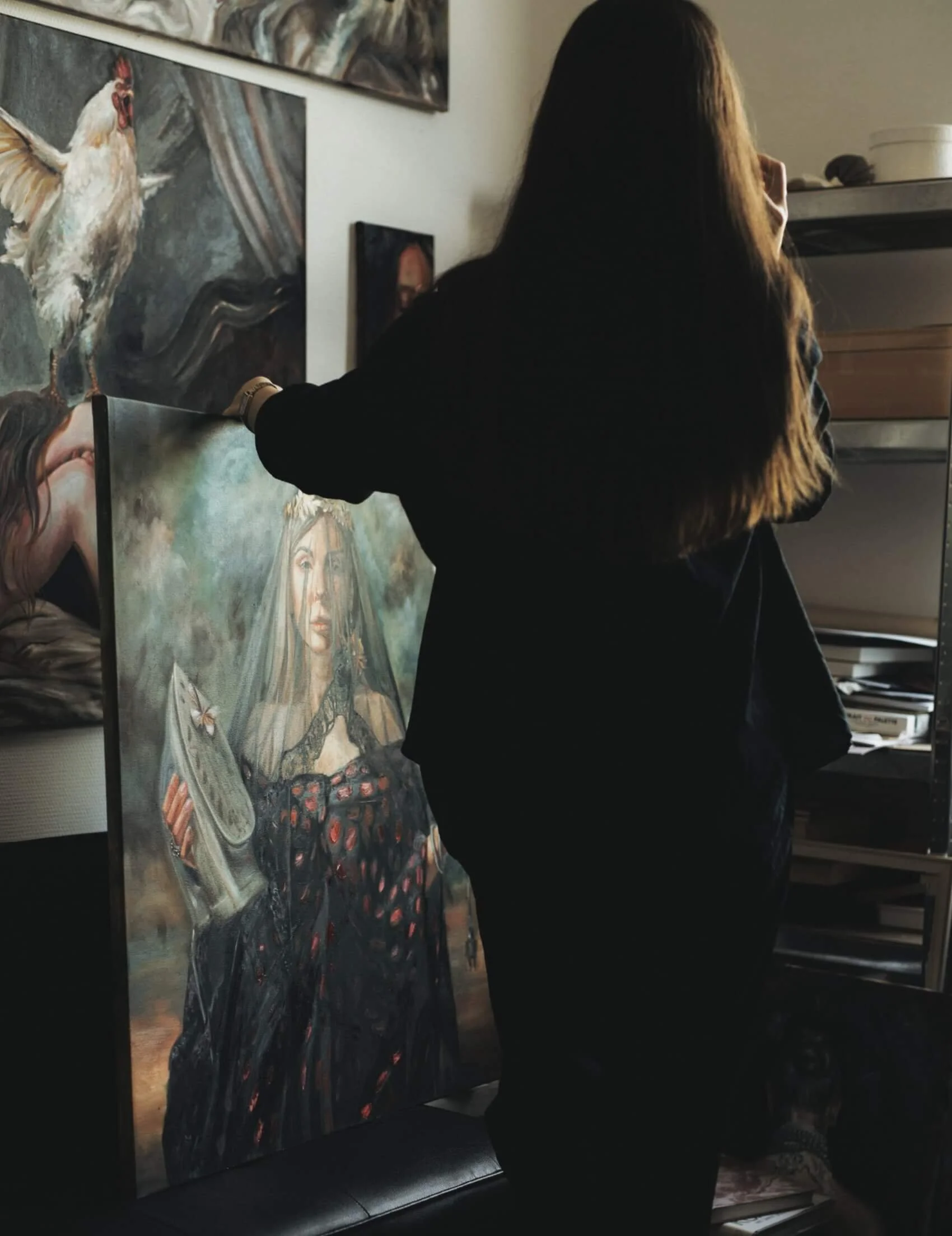
“The painting is about allowing yourself to be a little strange sometimes… unusual methods can lead to unexpected results. ”
Which artists or movements have inspired your journey in painting?
Among contemporary artists, definitely Guillermo Lorca—I’m lucky to know him personally. I also admire Hollis Dunlap, Kaja Norum, and photographer Sally Mann. From the past, Northern European Renaissance art has been especially influential. These influences continue to shape my worldview and style.
What projects or new directions would you like to explore in the coming years?
Currently, I’m focused on refining my technique to explore my themes more deeply. Galleries that ignored me a year ago are now showing interest. I continue teaching and working on myself, and I’m curious to see where this journey will lead.