Exclusive Interview with Santi Pina
The Subtle Power of Santi Pina’s Paintings
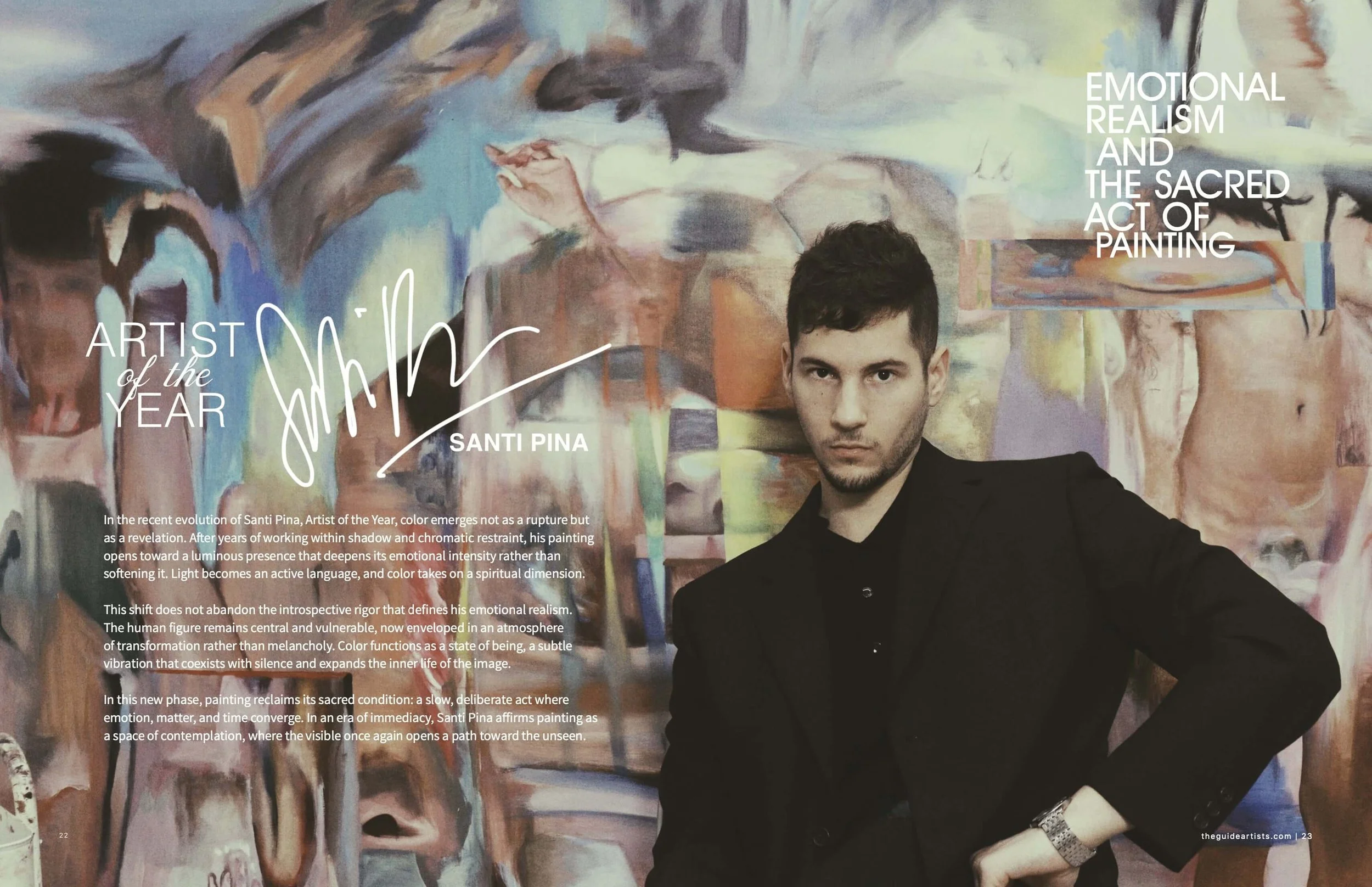
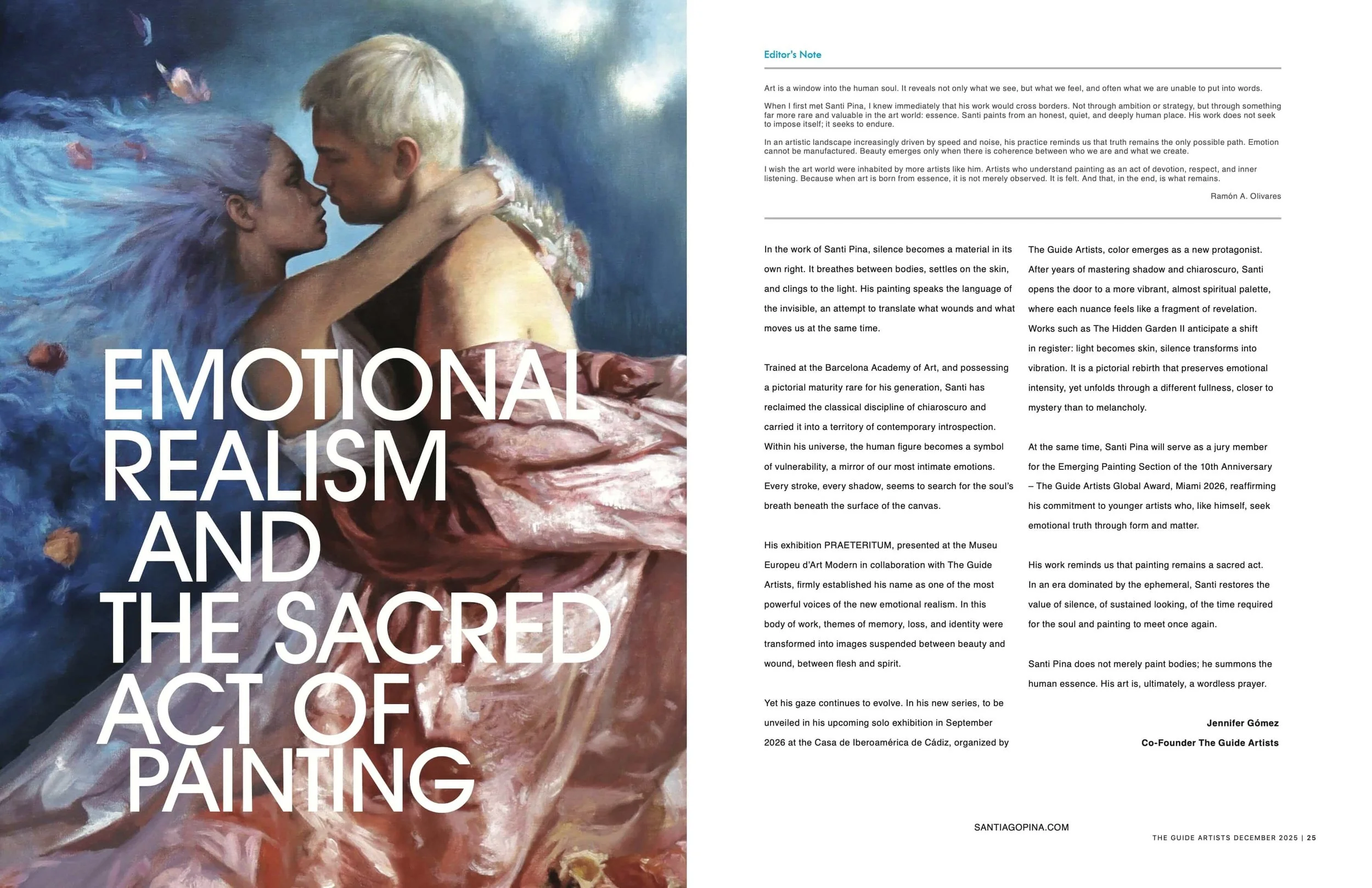
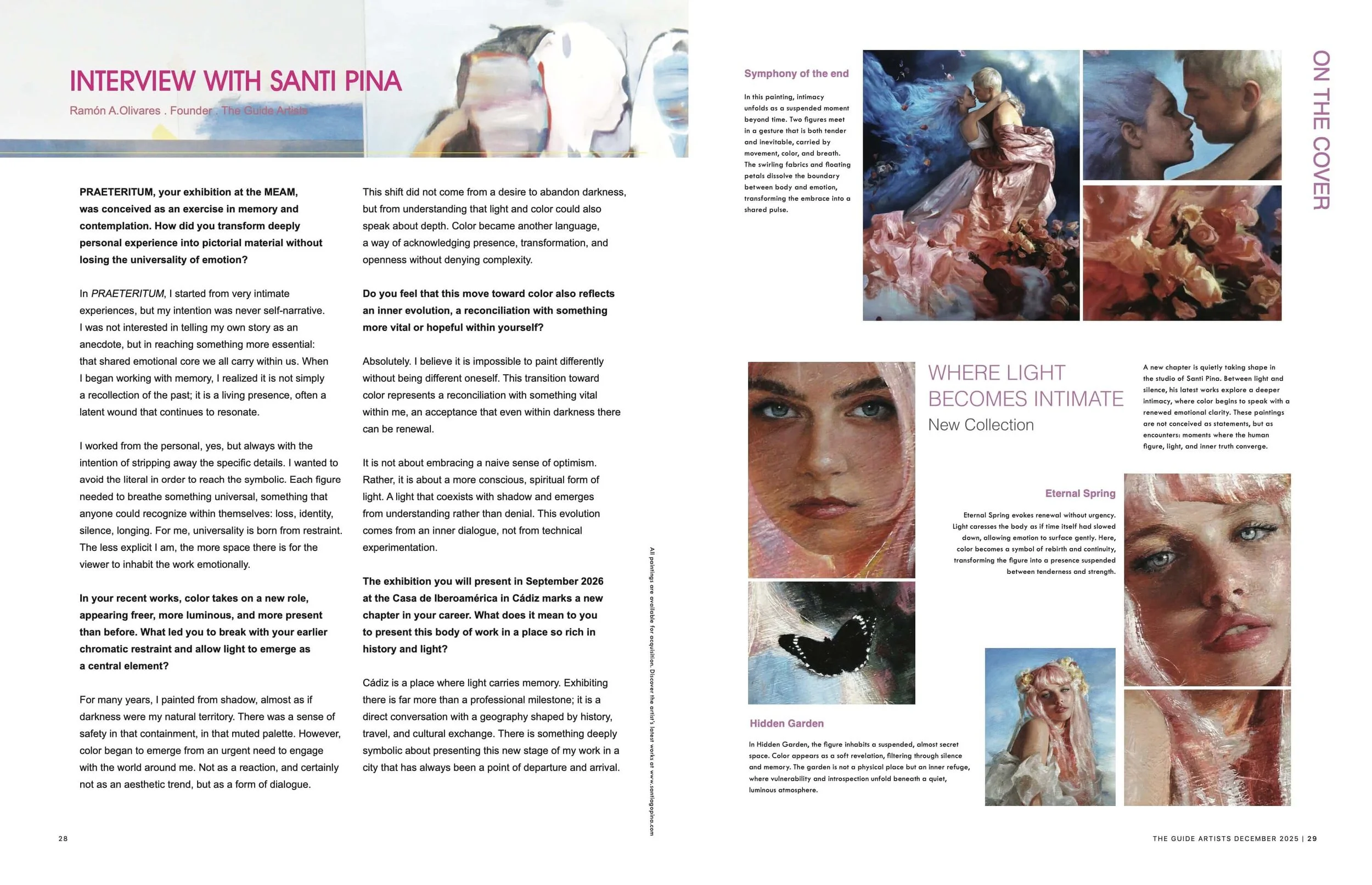
Santi Pina’s designation as Artist of the Year celebrates a career defined by creative honesty and exceptional artistic maturity. His paintings, filled with quiet gestures, intimate atmospheres, and subtle emotional nuance, reveal a vision capable of transforming the everyday into a poetic experience.
This special edition pays tribute to his artistic vision and to the truth that inhabits each of his works. Through our exclusive interview, we explore the thought, discipline, and sensitivity that have positioned him among the most relevant artists of his generation.
PRAETERITUM, your exhibition at the MEAM, was conceived as an exercise in memory and contemplation. How did you transform deeply personal experience into pictorial material without losing the universality of emotion?
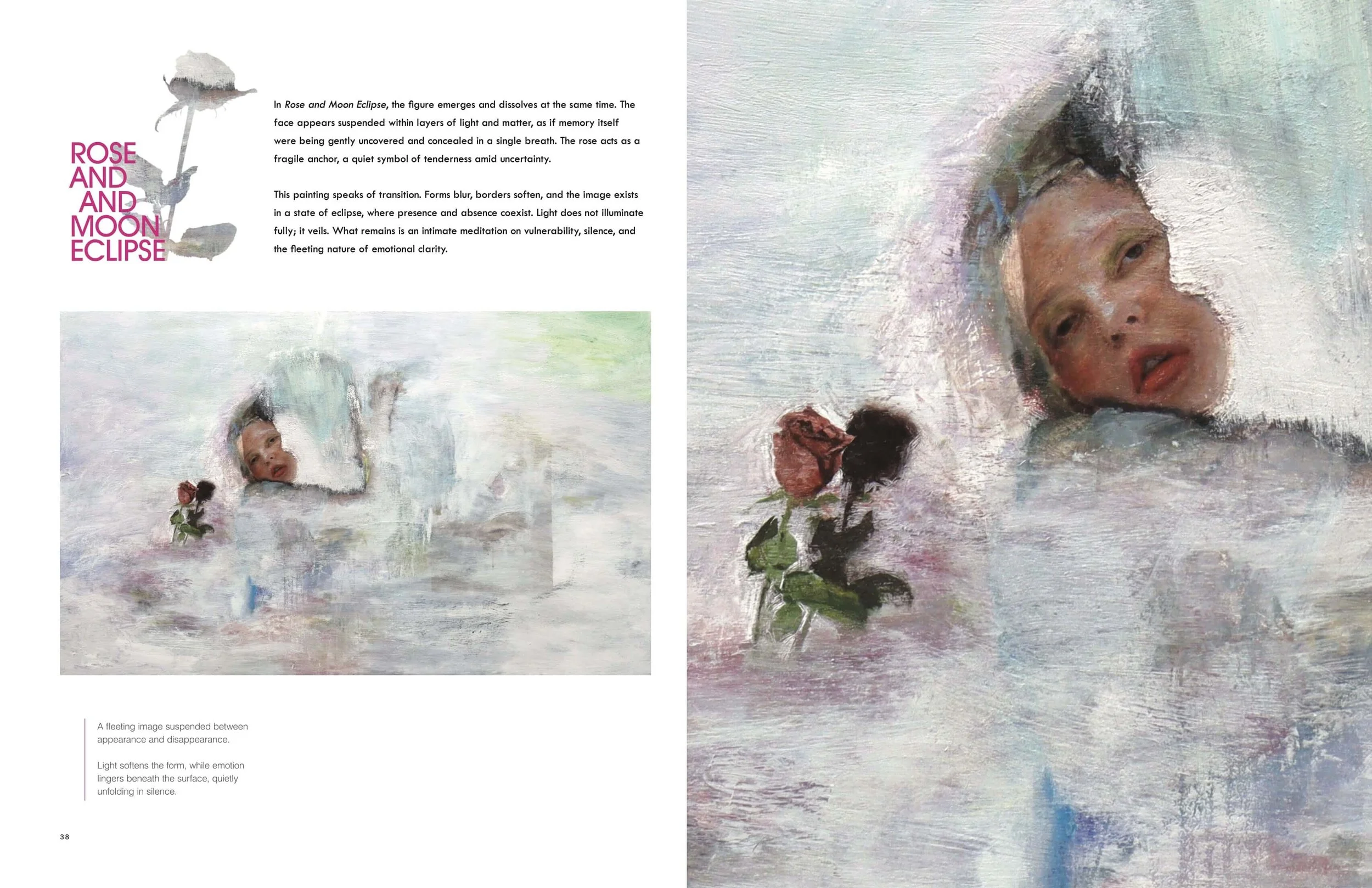
In PRAETERITUM, I started from very intimate experiences, but my intention was never self-narrative. I was not interested in telling my own story as an anecdote, but in reaching something more essential: that shared emotional core we all carry within us. When I began working with memory, I realized it is not simply a recollection of the past; it is a living presence, often a latent wound that continues to resonate.
I worked from the personal, yes, but always with the intention of stripping away the specific details. I wanted to avoid the literal in order to reach the symbolic. Each figure needed to breathe something universal, something that anyone could recognize within themselves: loss, identity, silence, longing. For me, universality is born from restraint. The less explicit I am, the more space there is for the viewer to inhabit the work emotionally.
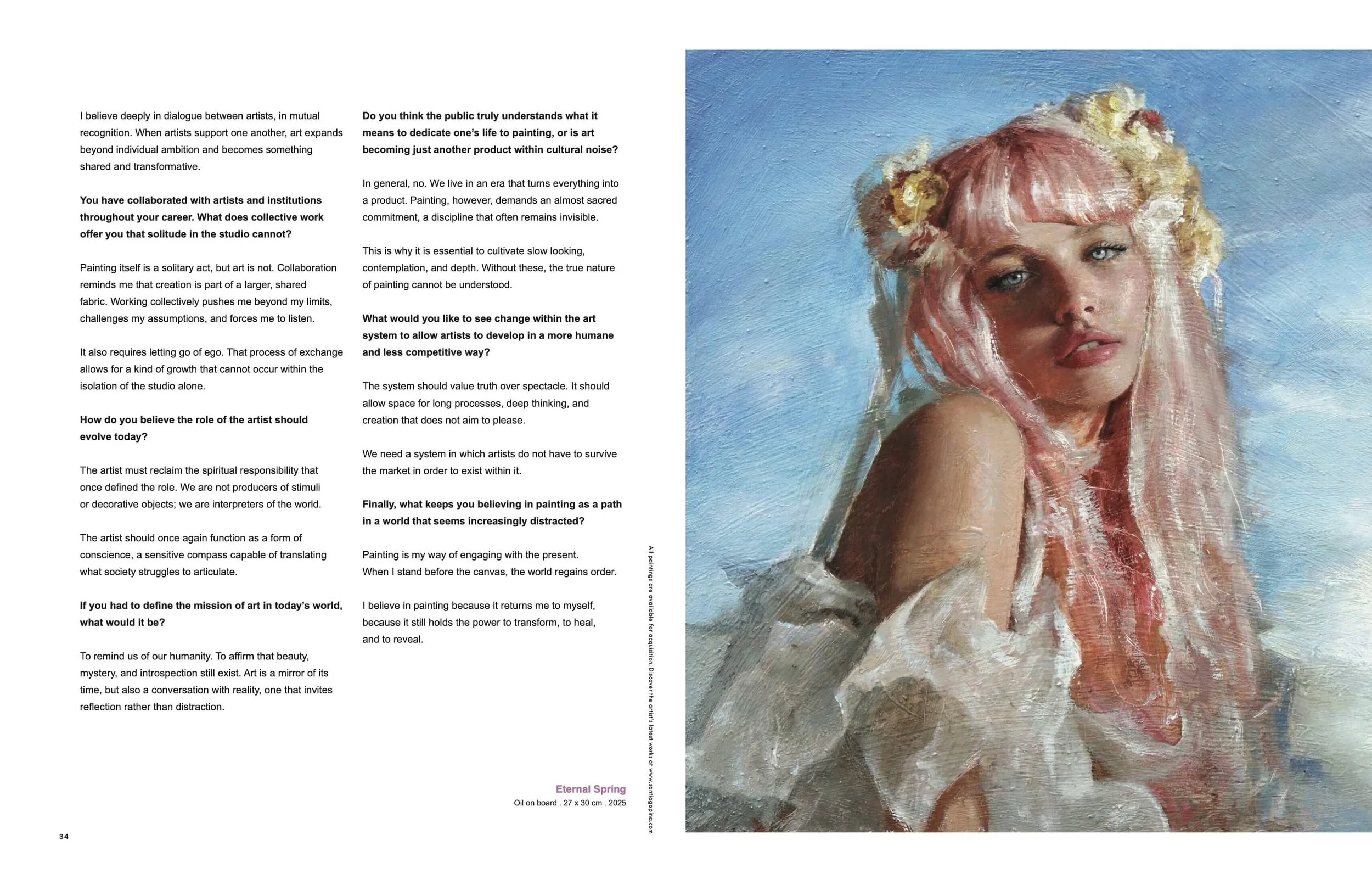
In your recent works, color takes on a new role, appearing freer, more luminous, and more present than before. What led you to break with your earlier chromatic restraint and allow light to emerge as a central element?
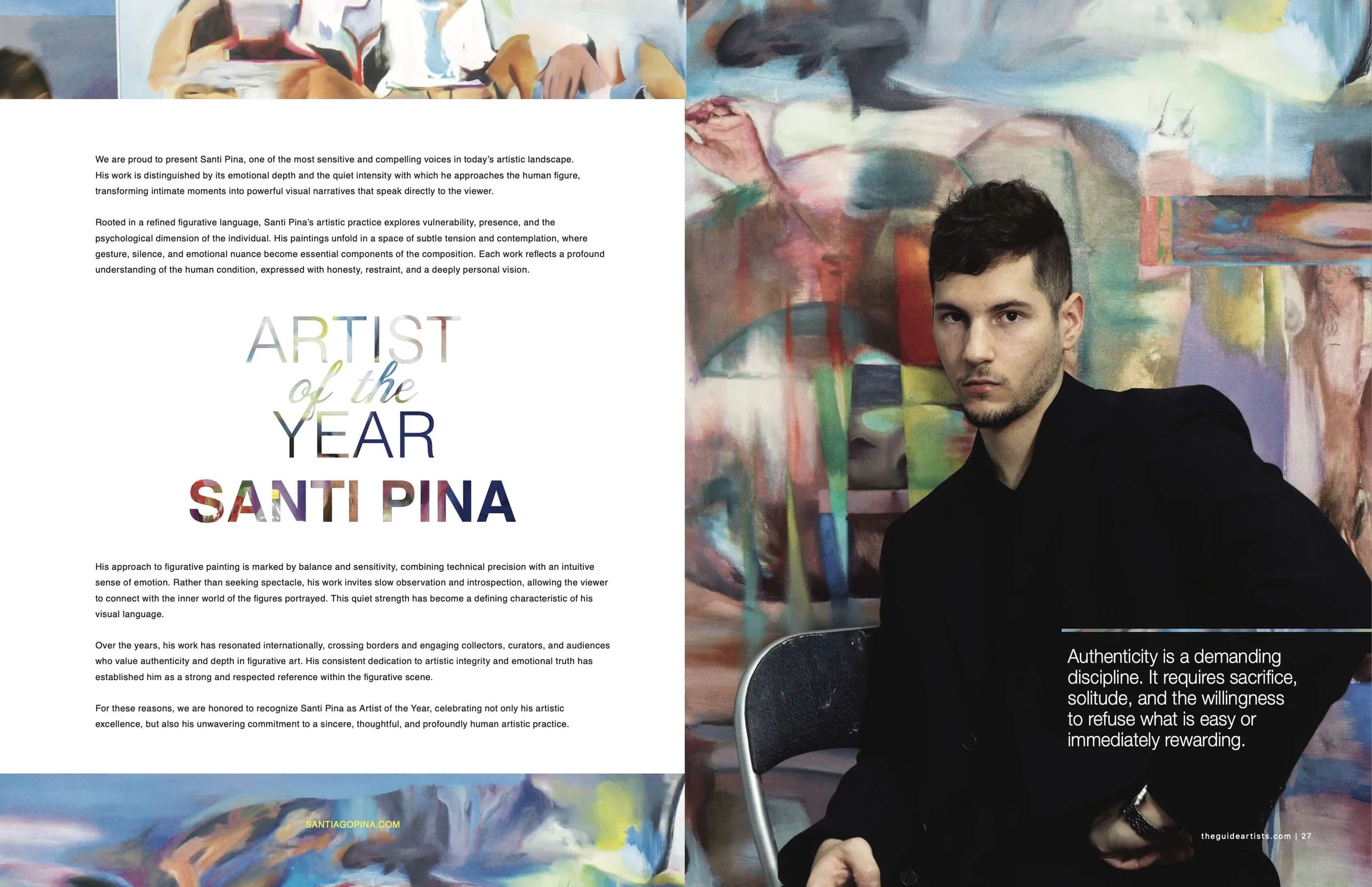
For many years, I painted from shadow, almost as if darkness were my natural territory. There was a sense of safety in that containment, in that muted palette. However, color began to emerge from an urgent need to engage with the world around me. Not as a reaction, and certainly not as an aesthetic trend, but as a form of dialogue.
This shift did not come from a desire to abandon darkness, but from understanding that light and color could also speak about depth. Color became another language, a way of acknowledging presence, transformation, and openness without denying complexity.
Do you feel that this move toward color also reflects an inner evolution, a reconciliation with something more vital or hopeful within yourself?
Absolutely. I believe it is impossible to paint differently without being different oneself. This transition toward color represents a reconciliation with something vital within me, an acceptance that even within darkness there can be renewal.
It is not about embracing a naive sense of optimism. Rather, it is about a more conscious, spiritual form of light. A light that coexists with shadow and emerges from understanding rather than denial. This evolution comes from an inner dialogue, not from technical experimentation.
The exhibition you will present in September 2026 at the Casa de Iberoamérica in Cádiz marks a new chapter in your career. What does it mean to you to present this body of work in a place so rich in history and light?
Cádiz is a place where light carries memory. Exhibiting there is far more than a professional milestone; it is a direct conversation with a geography shaped by history, travel, and cultural exchange. There is something deeply symbolic about presenting this new stage of my work in a city that has always been a point of departure and arrival.
Showing this body of work in such a context feels almost ritualistic. The space amplifies the transformation I am experiencing pictorially and gives it an added layer of meaning, as if the environment itself were participating in the narrative of the work.
As a jury member of the Emerging Painting Section of the 10th Anniversary – The Guide Artists Global Award, Miami 2026, you will encounter new artistic voices. What do you value most in a young artist, and what do you believe is essential for longevity?
I am drawn to a gaze that cannot be ignored. Not technical virtuosity, not stylistic trends, but inevitability. The artists who endure are not necessarily the most skilled, but those who are consumed by a vision that compels them to create.
I value fierce authenticity, radical vulnerability, and the courage to take risks where others choose comfort. Longevity comes from an inner necessity, from an artistic voice that insists on existing regardless of external validation.
How do technical control and intuition coexist in your creative process? At what point does reason give way to instinct?
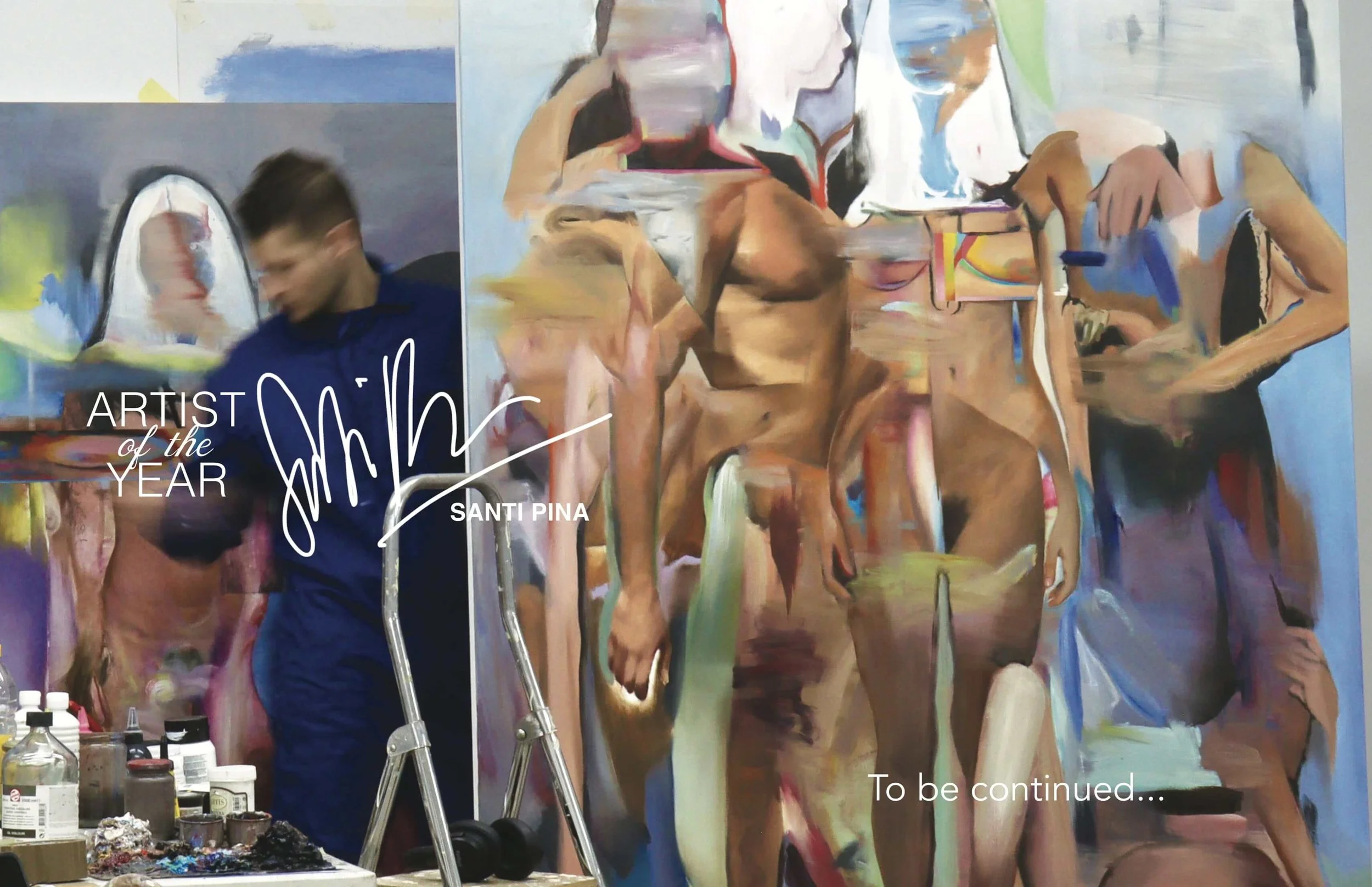
For me, technique is the bridge, and intuition is the destination. I begin with a strong sense of control, often almost obsessive, because structure allows the work to exist. But there comes a moment when reason reaches its limit. When I sense that the painting has begun to breathe on its own, I let go.
At that point, intuition takes over the gesture. That moment, when the painting seems to paint me rather than the other way around, is where the essential truth of the work emerges.
Figurative painting is experiencing a renewed international presence, yet competition for visibility is intense. How do you view the current landscape for young artists committed to classical painting and contemporary realism?
It is a challenging but fertile moment. While there is a renewed interest in figurative art, there is also an overwhelming saturation of images. Today, what truly differentiates a painter is not technical ability, but emotional depth. The competition for visibility is undeniably fierce, but those who look inward rather than chasing trends will ultimately find their place. Depth takes time, and time remains one of the most radical gestures in contemporary art.
Many emerging artists feel pressured to adapt to the market or to constantly stand out. How can one preserve authenticity in this environment?
By remembering that the market does not know who you are. Authenticity is a demanding discipline. It requires sacrifice, solitude, and the willingness to refuse what is easy or immediately rewarding.
When you create from a place of truth, recognition may come more slowly, but it will be lasting. Authenticity does not rush. It unfolds, and in doing so, it becomes unforgettable.
From the outside, the art world often appears glamorous but highly competitive. What is your perspective on solidarity among artists? Is there room for genuine community?
Community exists when the artist has confronted and overcome their own fear. Rivalry is born from emptiness. The creator who truly knows their voice does not compete; they accompany.
I believe deeply in dialogue between artists, in mutual recognition. When artists support one another, art expands beyond individual ambition and becomes something shared and transformative.
You have collaborated with artists and institutions throughout your career. What does collective work offer you that solitude in the studio cannot?
Painting itself is a solitary act, but art is not. Collaboration reminds me that creation is part of a larger, shared fabric. Working collectively pushes me beyond my limits, challenges my assumptions, and forces me to listen.
It also requires letting go of ego. That process of exchange allows for a kind of growth that cannot occur within the isolation of the studio alone.
How do you believe the role of the artist should evolve today?
The artist must reclaim the spiritual responsibility that once defined the role. We are not producers of stimuli or decorative objects; we are interpreters of the world.
The artist should once again function as a form of conscience, a sensitive compass capable of translating what society struggles to articulate.
If you had to define the mission of art in today’s world, what would it be?
To remind us of our humanity. To affirm that beauty, mystery, and introspection still exist. Art is a mirror of its time, but also a conversation with reality, one that invites reflection rather than distraction.
Do you think the public truly understands what it means to dedicate one’s life to painting, or is art becoming just another product within cultural noise?
In general, no. We live in an era that turns everything into a product. Painting, however, demands an almost sacred commitment, a discipline that often remains invisible.
This is why it is essential to cultivate slow looking, contemplation, and depth. Without these, the true nature of painting cannot be understood.
What would you like to see change within the art system to allow artists to develop in a more humane and less competitive way?
The system should value truth over spectacle. It should allow space for long processes, deep thinking, and creation that does not aim to please.
We need a system in which artists do not have to survive the market in order to exist within it.
Finally, what keeps you believing in painting as a path in a world that seems increasingly distracted?
Painting is my way of engaging with the present. When I stand before the canvas, the world regains order.
I believe in painting because it returns me to myself, because it still holds the power to transform, to heal, and to reveal.