Interview with Mónica Fernández
“BEING SURROUNDED BY SO MUCH ART HISTORY MADE ME AWARE THAT PAINTING IS PART OF A CONVERSATION THAT HAS BEEN TAKING PLACE FOR CENTURIES.”
From a very young age, you showed a natural inclination toward painting. What memories do you have of your first encounters with art?
From a very young age, I felt a natural connection with drawing and painting. It was a way of observing the world, but also of inhabiting it. I remember spending hours drawing, inventing stories and characters, as if paper were a space where I could organize what I felt or imagined.
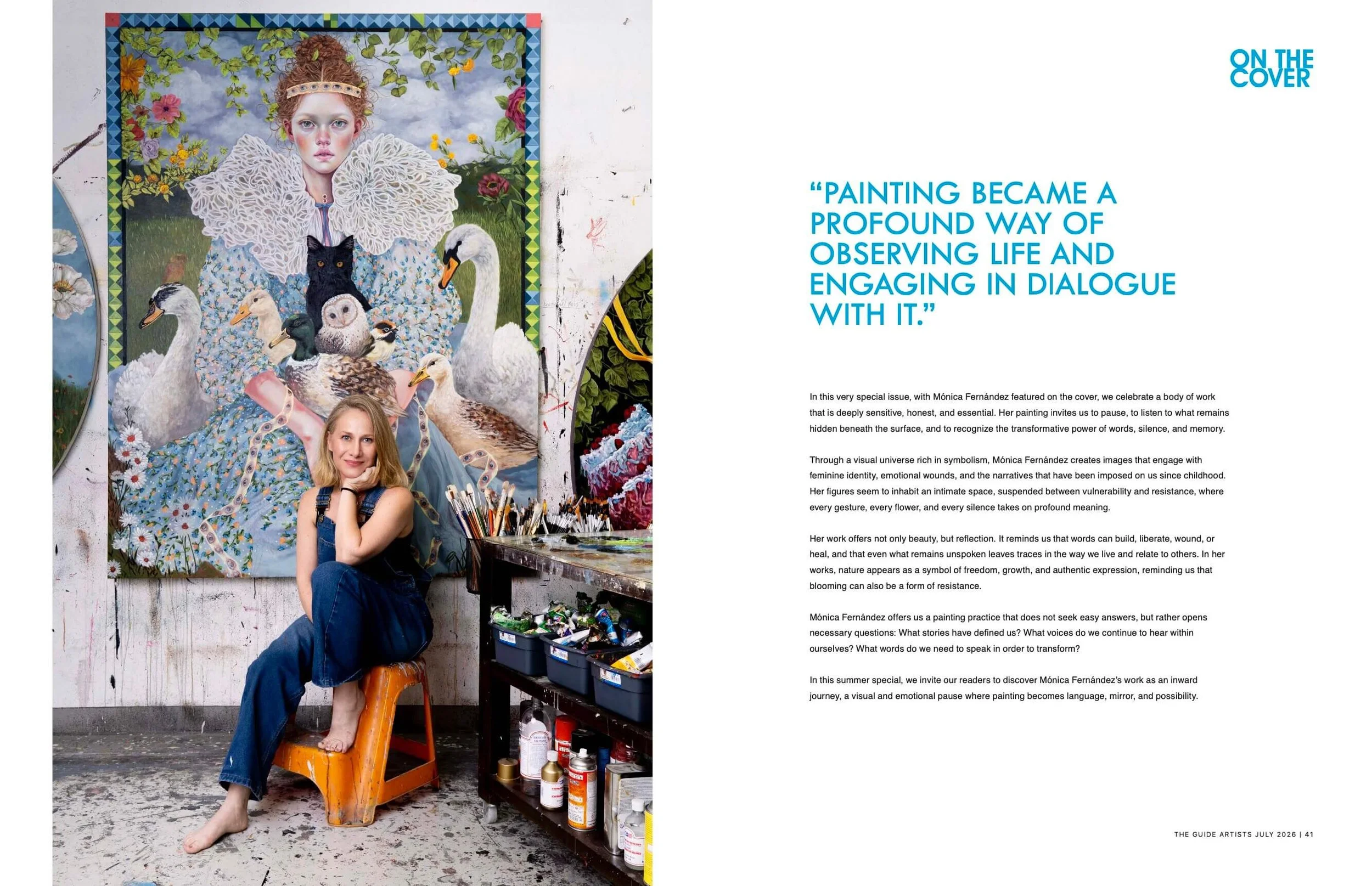
Over time, I came to understand that this need to create was not merely a game, but a profound way of observing life and engaging in dialogue with it.
You began your training as a self-taught artist before pursuing formal studies. How did that intuitive stage influence your artistic development?
The self-taught stage was very important because it allowed me to build a deeply intuitive relationship with painting. Before learning academic rules or techniques, there was already a very personal conversation with the canvas.
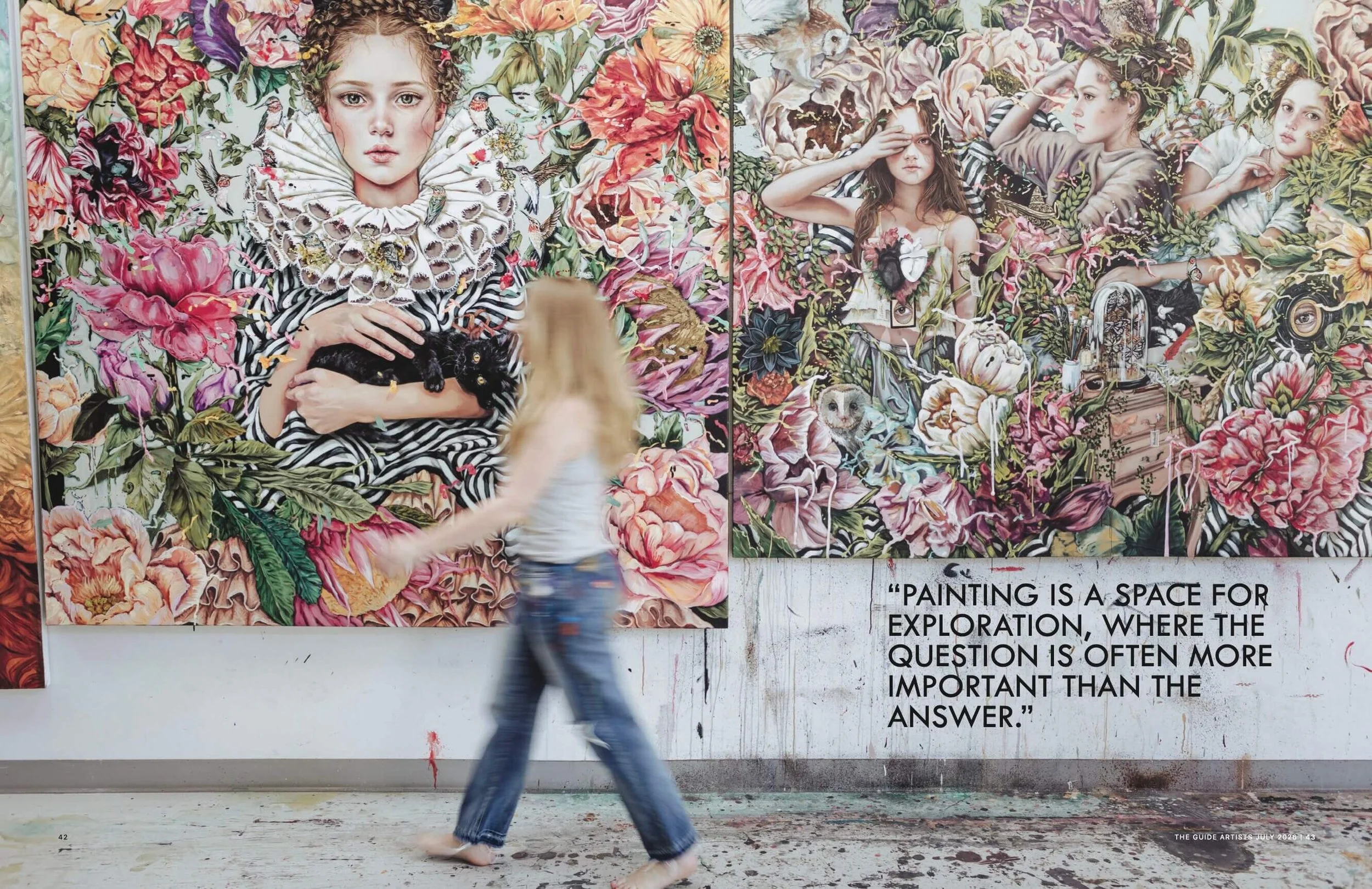
That initial freedom taught me to trust intuition and to understand painting as a space for exploration, where the question is often more important than the answer.
In 1999, you studied at the Lorenzo de’ Medici Academy in Florence. What did it mean for you to train in an environment with such a rich artistic tradition?
Studying in Florence was a very meaningful experience. Being surrounded by so much art history makes you aware that painting is part of a conversation that has been taking place for centuries.
It was an opportunity to learn from that tradition while also asking myself what my own voice was within that long history.
Later, you continued your training in San Miguel de Allende, at the Bellas Artes Academy and the Instituto Allende. How did that experience enrich your pictorial language?
San Miguel de Allende was a very special period in my life. Living there on my own was an important experience of personal growth. It was a time of discovery, independence, and searching.
In addition, San Miguel is filled with art and history. The colors of Mexico, the light, the textures, and the visual intensity of the place deeply influenced my sensitivity as a painter. It was a time when I understood that painting was not only technique, but also a form of thought and inner exploration.
Female figures appear consistently throughout your work. What do they represent within your creative universe?
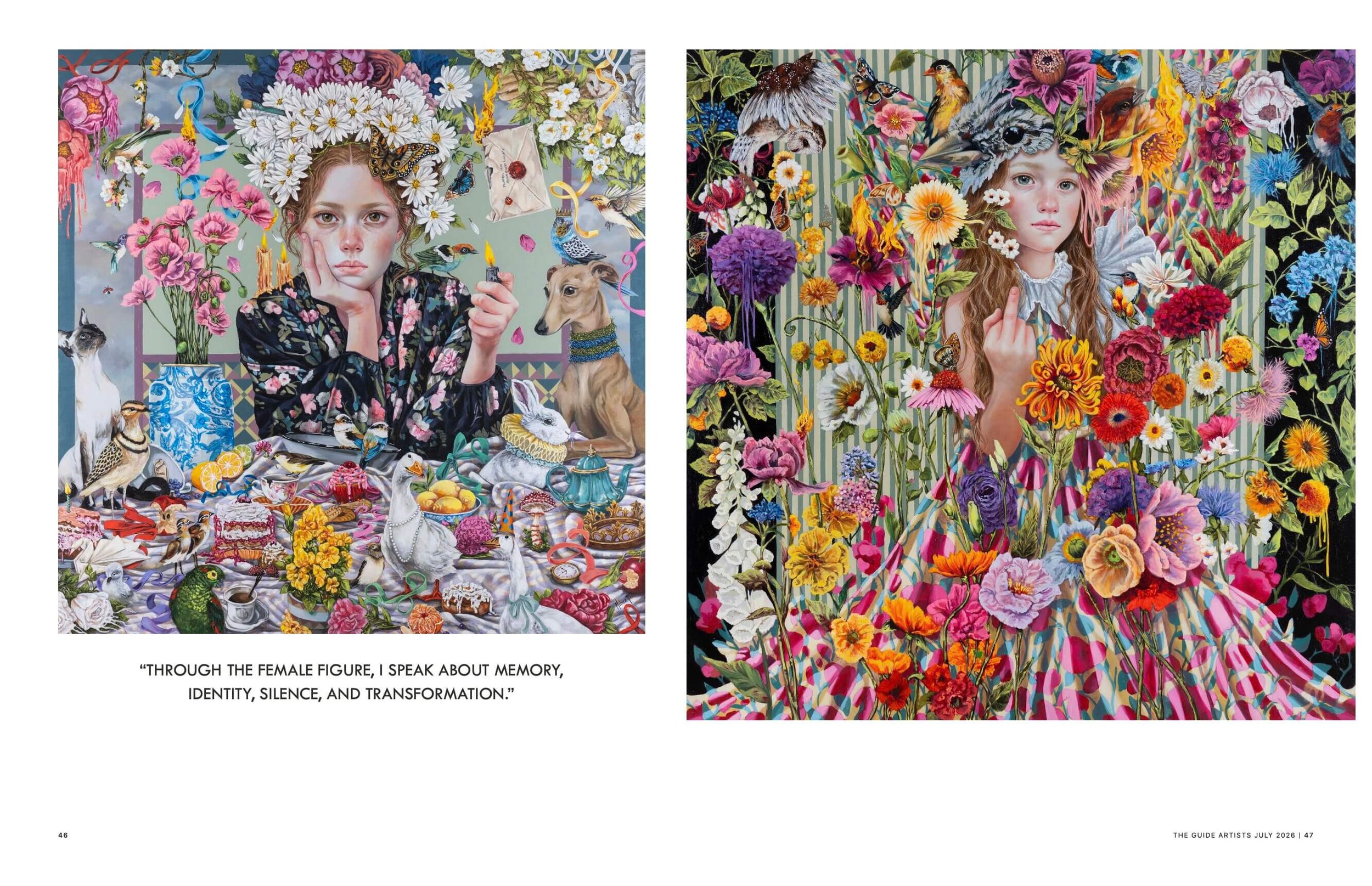
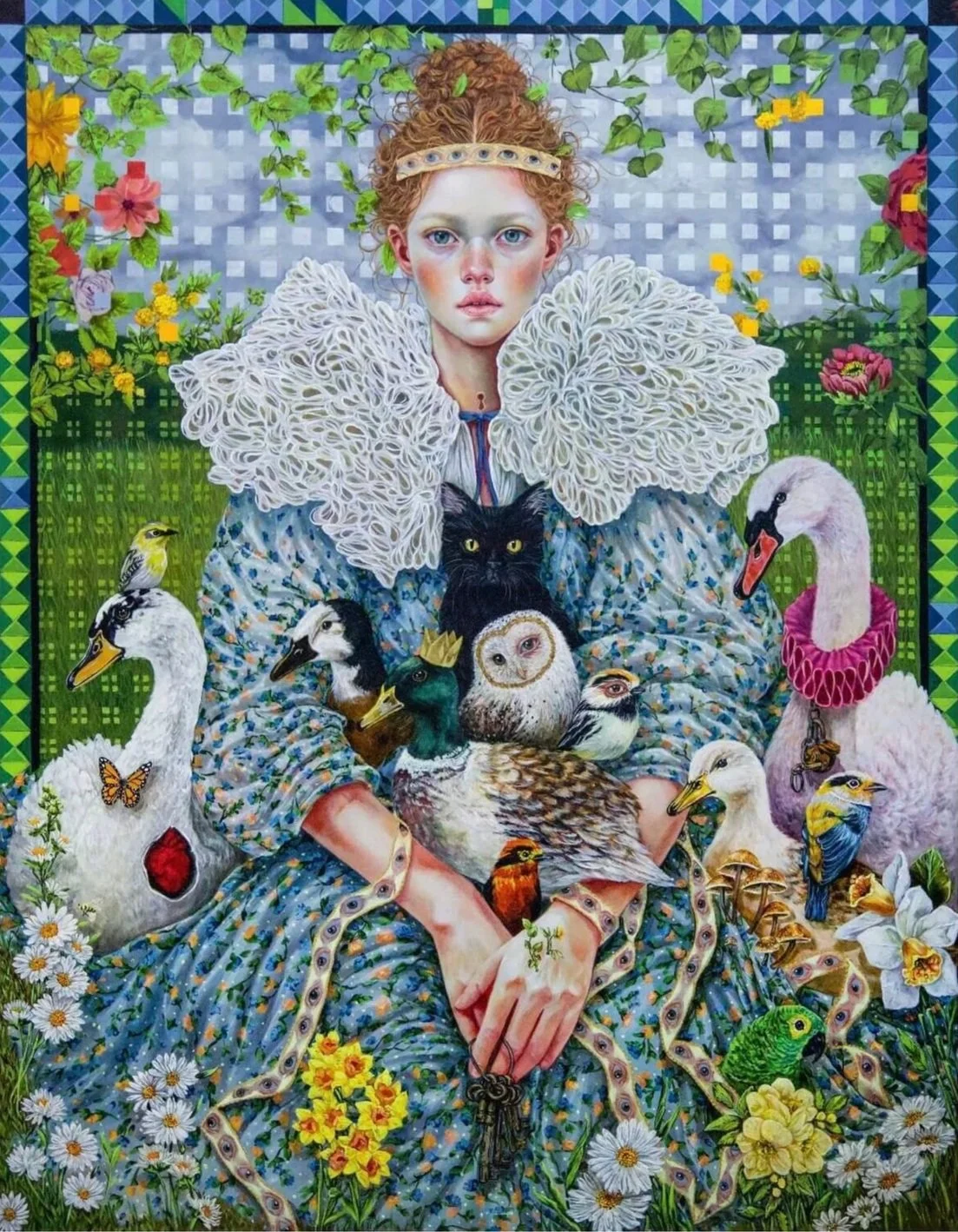
I paint women because it is through this skin that I have experienced life. But in reality, the female figure is not the central theme of my work.
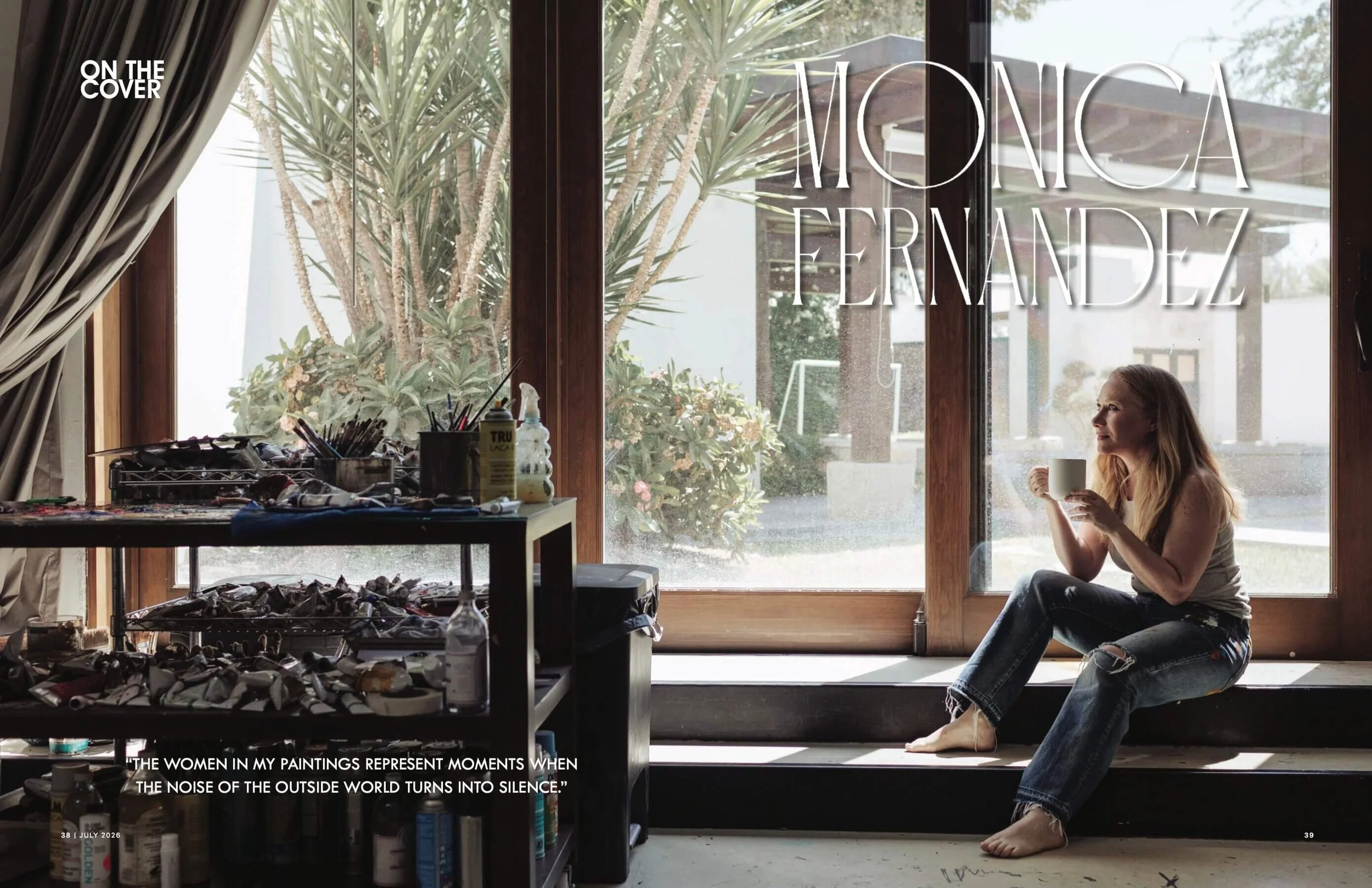
The women in my paintings represent those moments when the noise of the outside world turns into silence, and the gaze withdraws from the present and the future to turn inward. They are moments of introspection in which the most essential question arises: Who are you?
Through them, I speak about memory, identity, silence, and transformation.
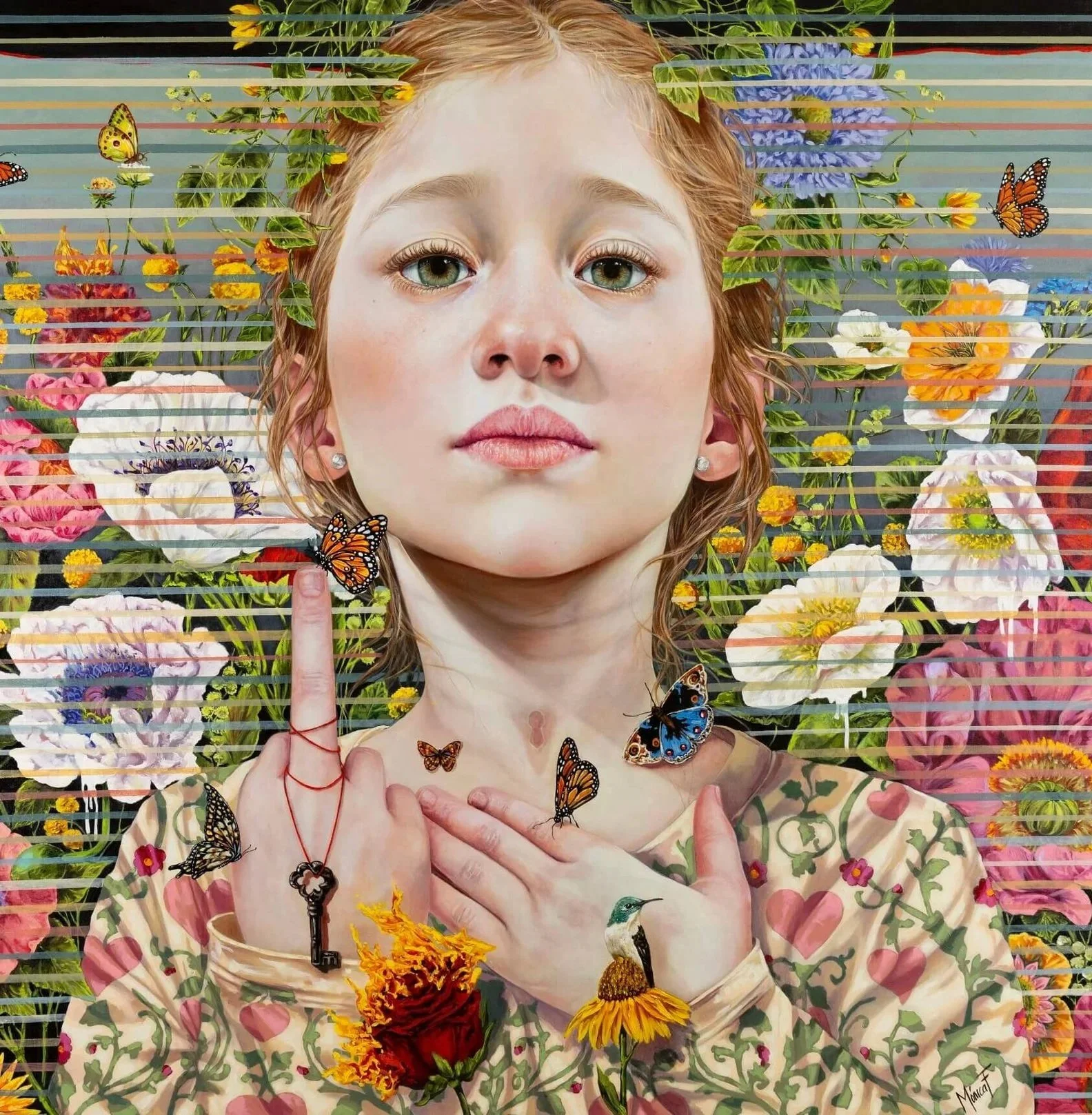
“THE COLORS OF MEXICO, THE LIGHT, THE TEXTURES, AND THE VISUAL INTENSITY OF SAN MIGUEL DE ALLENDE DEEPLY INFLUENCED MY SENSITIVITY AS A PAINTER.”
Your paintings convey silence and deep emotion. How would you describe the internal dialogue that emerges before the canvas?
For me, painting means entering a space of silence. It is a conversation that takes place without words, where images gradually appear.
Within those silences, an inner movement also takes place. It is the deepest voice asking who you are in the face of pain, beauty, grief, and all the emotions we experience as human beings.
I often work on several pieces at the same time because one painting opens questions that continue into another. Deep down, my work also reflects on the stories we have been told and on the power of the words we hear— and the words we tell ourselves—to shape the way we understand the world and ourselves.
You have spoken about the many facets you inhabit as a woman: daughter, mother, wife, friend, and artist. How do these identities intertwine in your creative process?
All of these facets are part of who I am, and inevitably, they find their way into the painting.
For me, art is not separate from life. Painting is nourished by everyday experiences, human relationships, moments of introspection, and the questions that arise from inhabiting different roles over time.
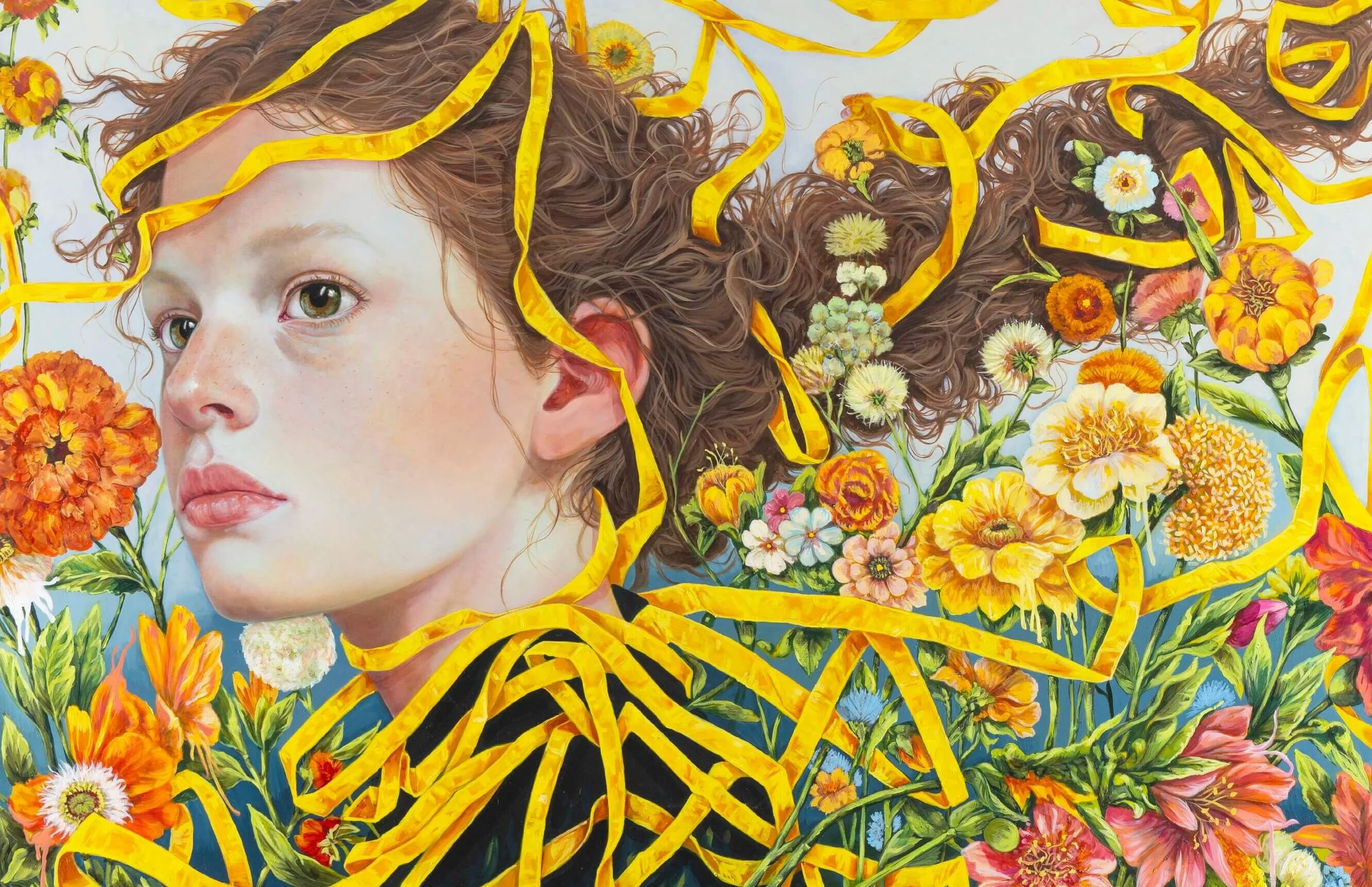
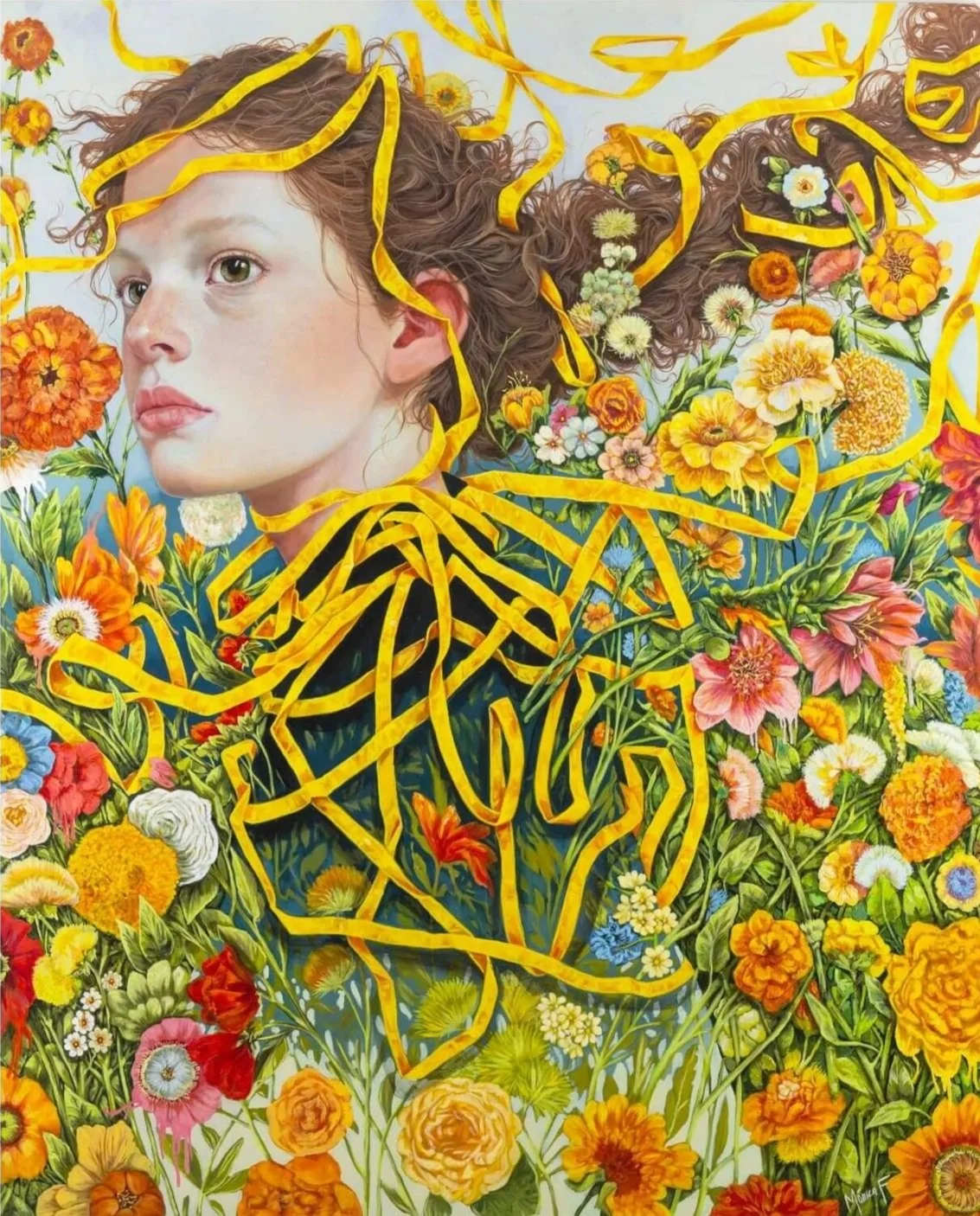
“IN SILENCE, THE INNER MOVEMENT BEGINS—THE ONE THAT ASKS WHO WE ARE IN THE FACE OF PAIN, BEAUTY, AND GRIEF.”
Your work invites introspection and reflection. What kind of experience do you hope viewers have when contemplating your pieces?
I am interested in offering viewers a moment of pause before the work. I want them to stop, observe calmly, and discover something of their own within it.
I do not seek to provide definitive answers, but rather to open spaces for reflection. If someone is able to recognize themselves in an emotion, a memory, or a thought while observing the painting, then the work is already having a conversation with that person.
“IN SILENCE, THE INNER MOVEMENT BEGINS—THE ONE THAT ASKS WHO WE ARE IN THE FACE OF PAIN, BEAUTY, AND GRIEF.”
“IN SILENCE, THE INNER MOVEMENT BEGINS—THE ONE THAT ASKS WHO WE ARE IN THE FACE OF PAIN, BEAUTY, AND GRIEF.”
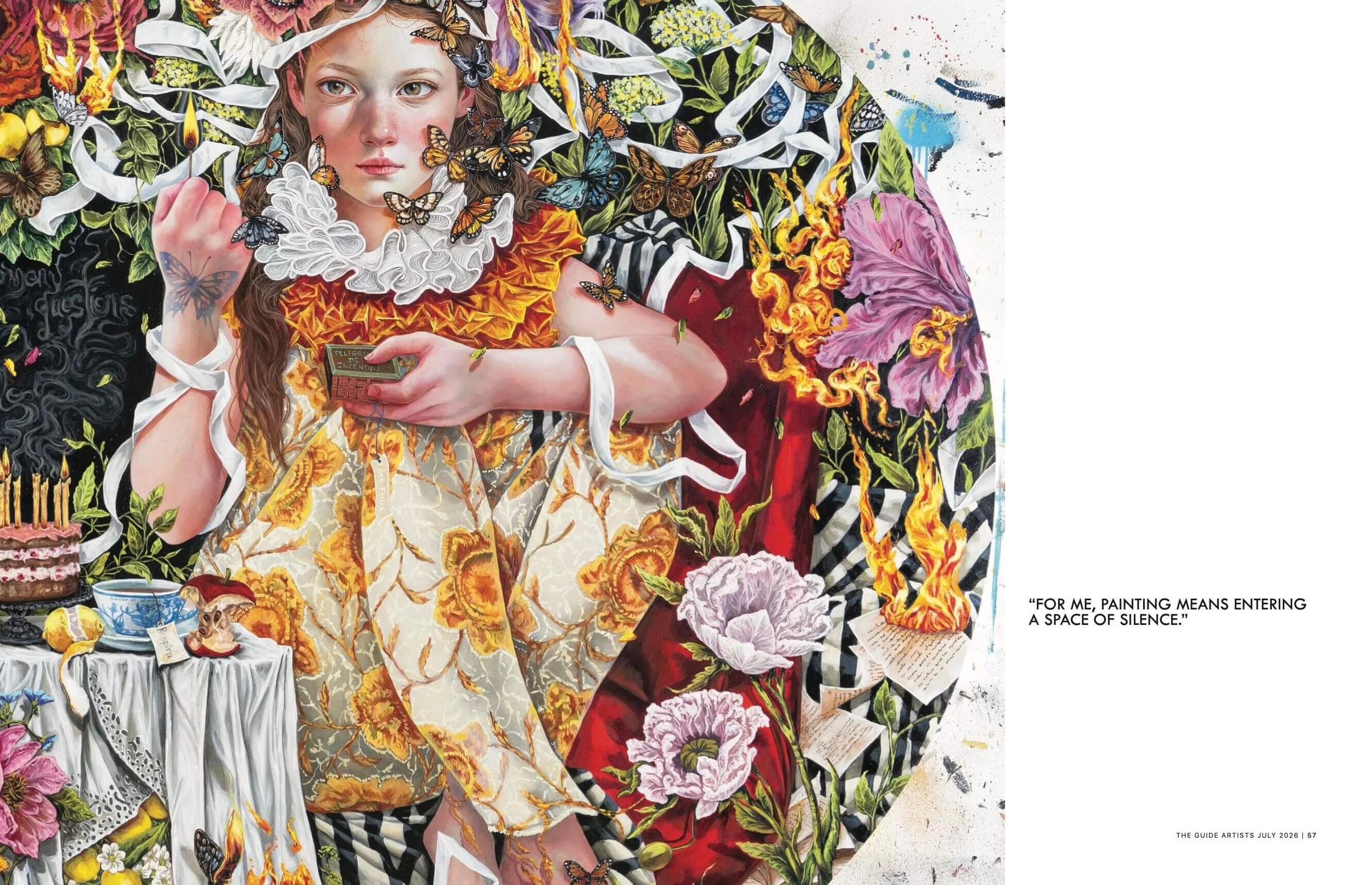
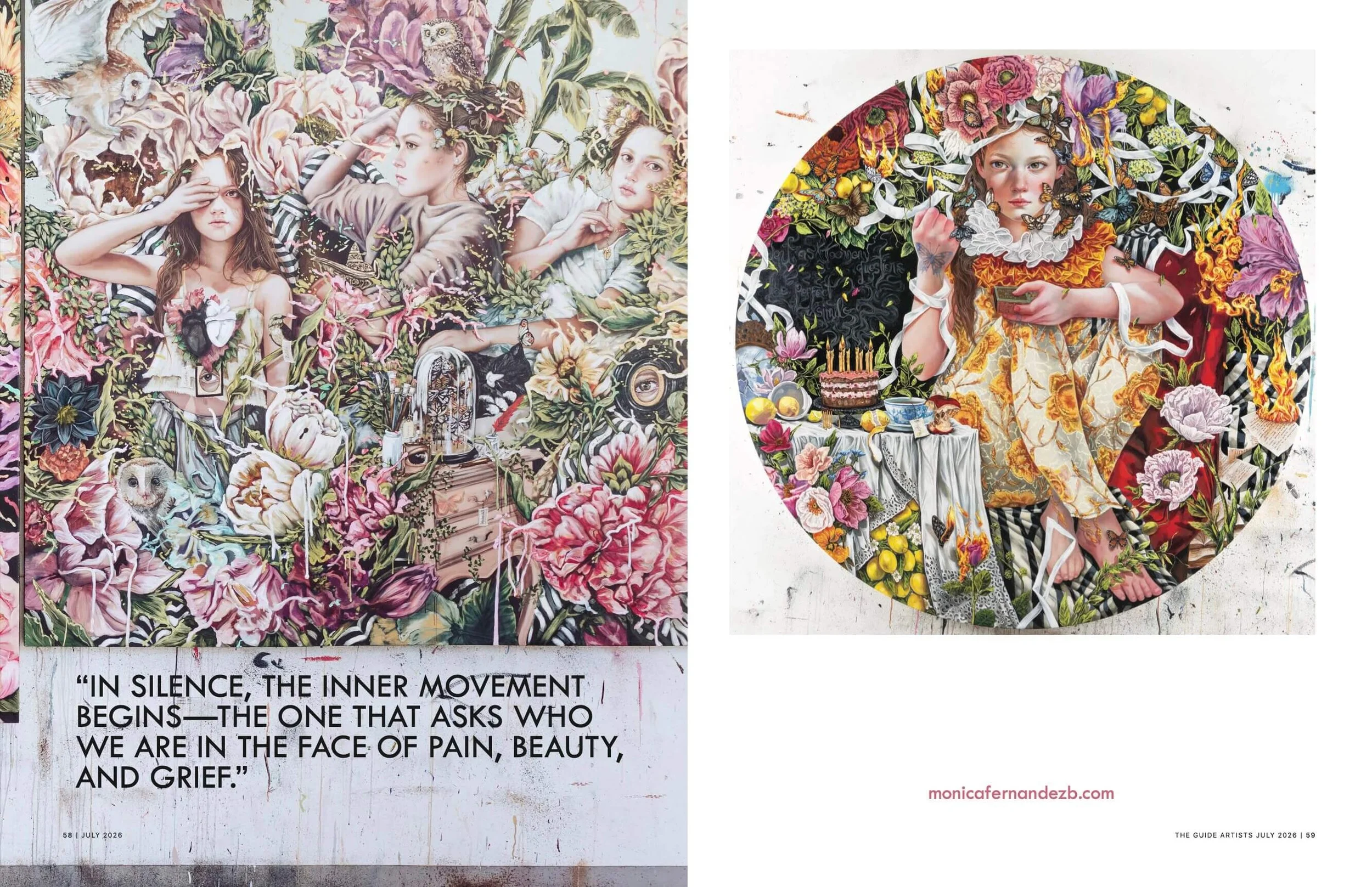
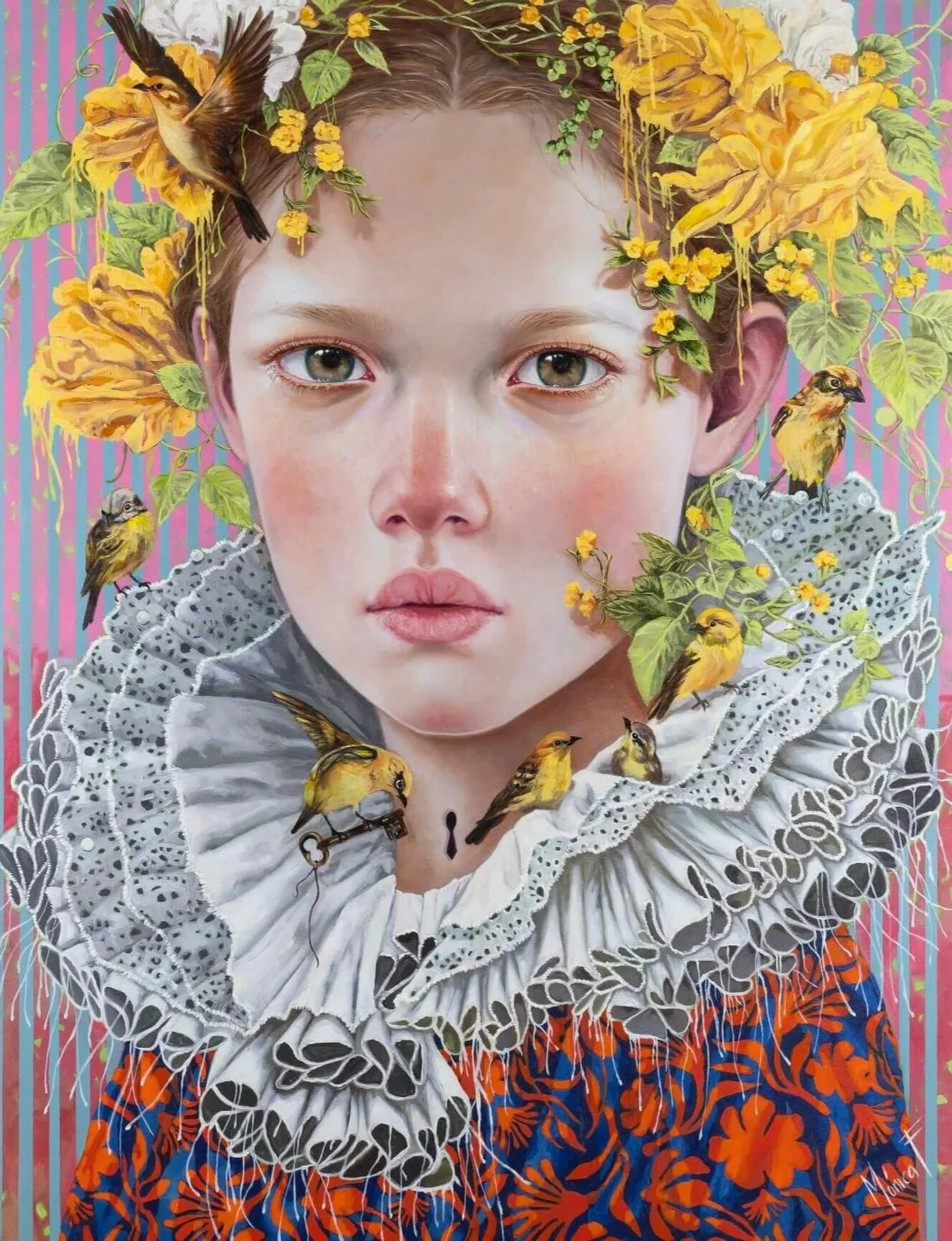
Mónica Fernández is featured in this edition of The Guide Artists with a body of work that is intense, symbolic, and deeply emotional. Her surreal universe explores human fragility, loneliness, fear, and the contradictions that shape our existence.
Born in Torreón, Coahuila, Mexico, she developed a connection with art from an early age and later completed her training in Florence and San Miguel de Allende, studying painting, drawing, sculpture, printmaking, and mixed media.
Her work has been presented in national and international exhibitions across Mexico, the United States, Italy, and Spain. In recent years, she has expanded her practice into new formats, including the immersive traveling exhibition Wild Flowers.
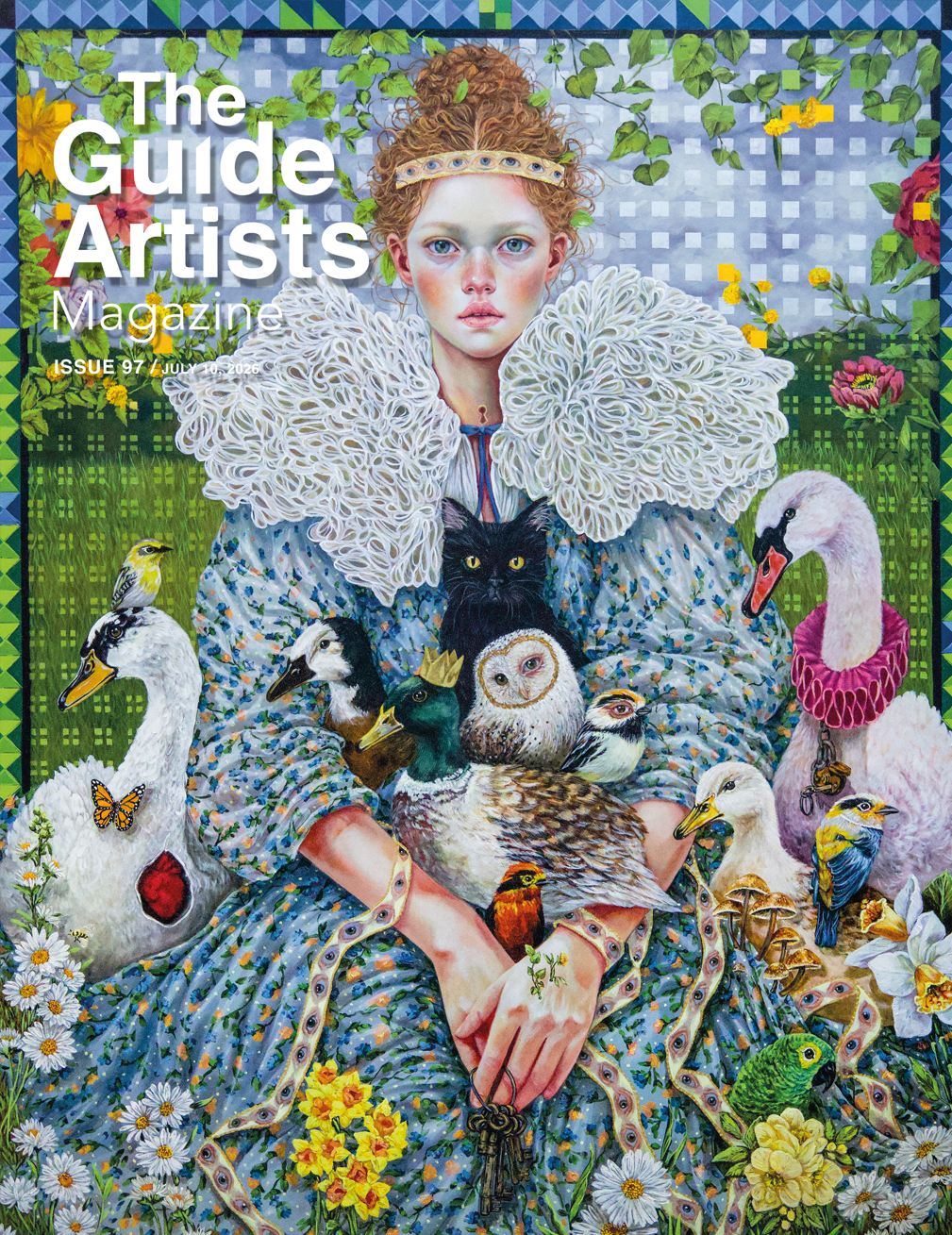
For 10 years, The Guide Artists has worked to discover talent, give a voice to artists with a distinctive identity, and present their work to an international audience. This edition celebrates Mónica Fernández’s career and personal visual language as part of our mission to discover and present the finest artists of our era.
DISCOVER MORE… THE GUIDE ARTISTS MAGAZINE ISSUE 97