Editorial – Issue 89
WHERE FLIGHT BEGINS
JENNIFER GÓMEZ | Co-Founder The Guide Artists
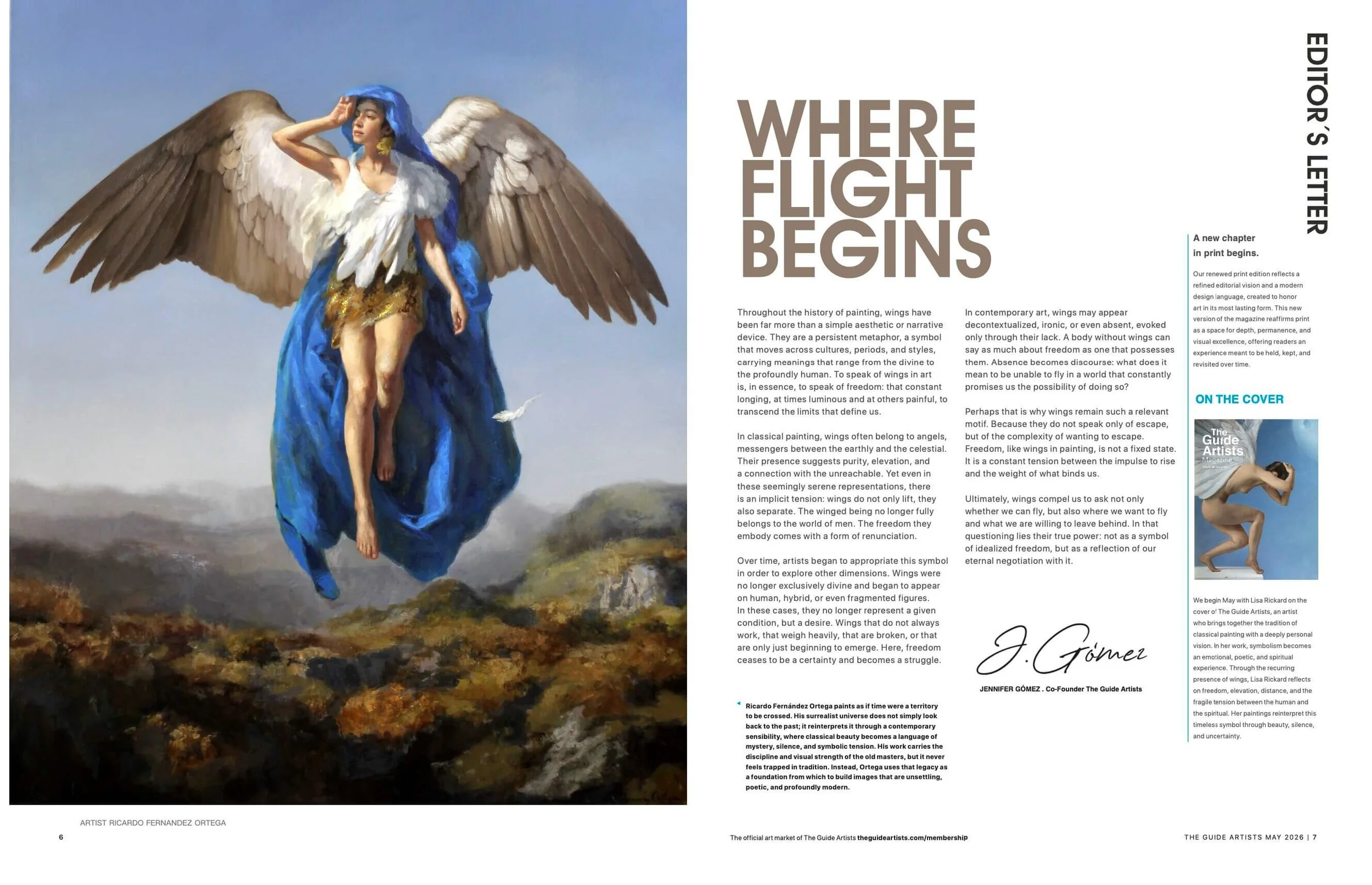
Throughout the history of painting, wings have been far more than a simple aesthetic or narrative device. They are a persistent metaphor, a symbol that moves across cultures, periods, and styles, carrying meanings that range from the divine to the profoundly human. To speak of wings in art is, in essence, to speak of freedom: that constant longing, at times luminous and at others painful, to transcend the limits that define us.
In classical painting, wings often belong to angels, messengers between the earthly and the celestial. Their presence suggests purity, elevation, and
a connection with the unreachable. Yet even in these seemingly serene representations, there is an implicit tension: wings do not only lift, they also separate. The winged being no longer fully belongs to the world of men. The freedom they embody comes with a form of renunciation.
Over time, artists began to appropriate this symbol in order to explore other dimensions. Wings were no longer exclusively divine and began to appear on human, hybrid, or even fragmented figures.
In these cases, they no longer represent a given condition, but a desire. Wings that do not always work, that weigh heavily, that are broken, or that are only just beginning to emerge. Here, freedom ceases to be a certainty and becomes a struggle.
In contemporary art, wings may appear decontextualized, ironic, or even absent, evoked only through their lack. A body without wings can say as much about freedom as one that possesses them. Absence becomes discourse: what does it mean to be unable to fly in a world that constantly promises us the possibility of doing so?
Perhaps that is why wings remain such a relevant motif. Because they do not speak only of escape, but of the complexity of wanting to escape. Freedom, like wings in painting, is not a fixed state. It is a constant tension between the impulse to rise and the weight of what binds us.
Ultimately, wings compel us to ask not only whether we can fly, but also where we want to fly and what we are willing to leave behind. In that questioning lies their true power: not as a symbol of idealized freedom, but as a reflection of our eternal negotiation with it.
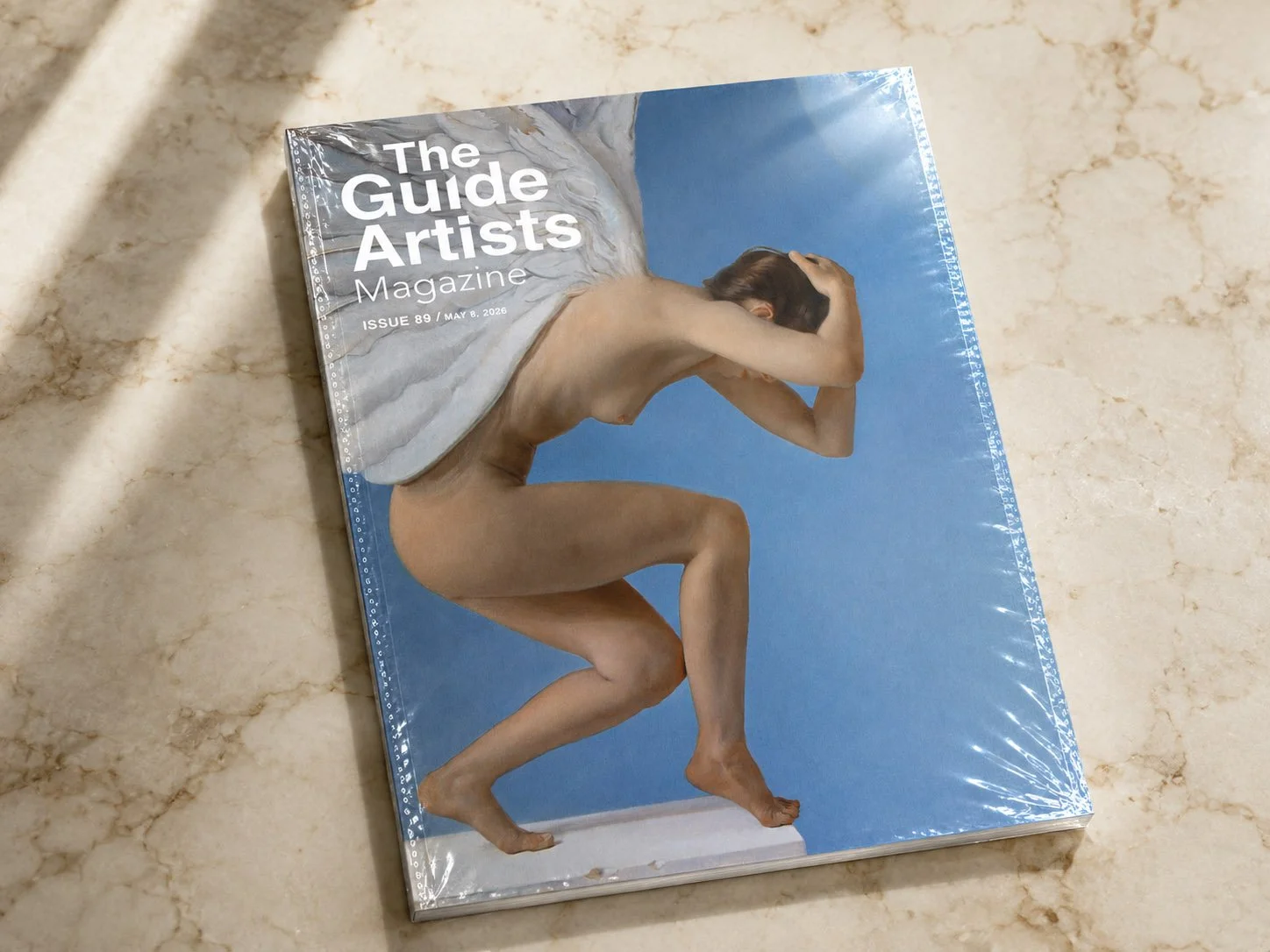
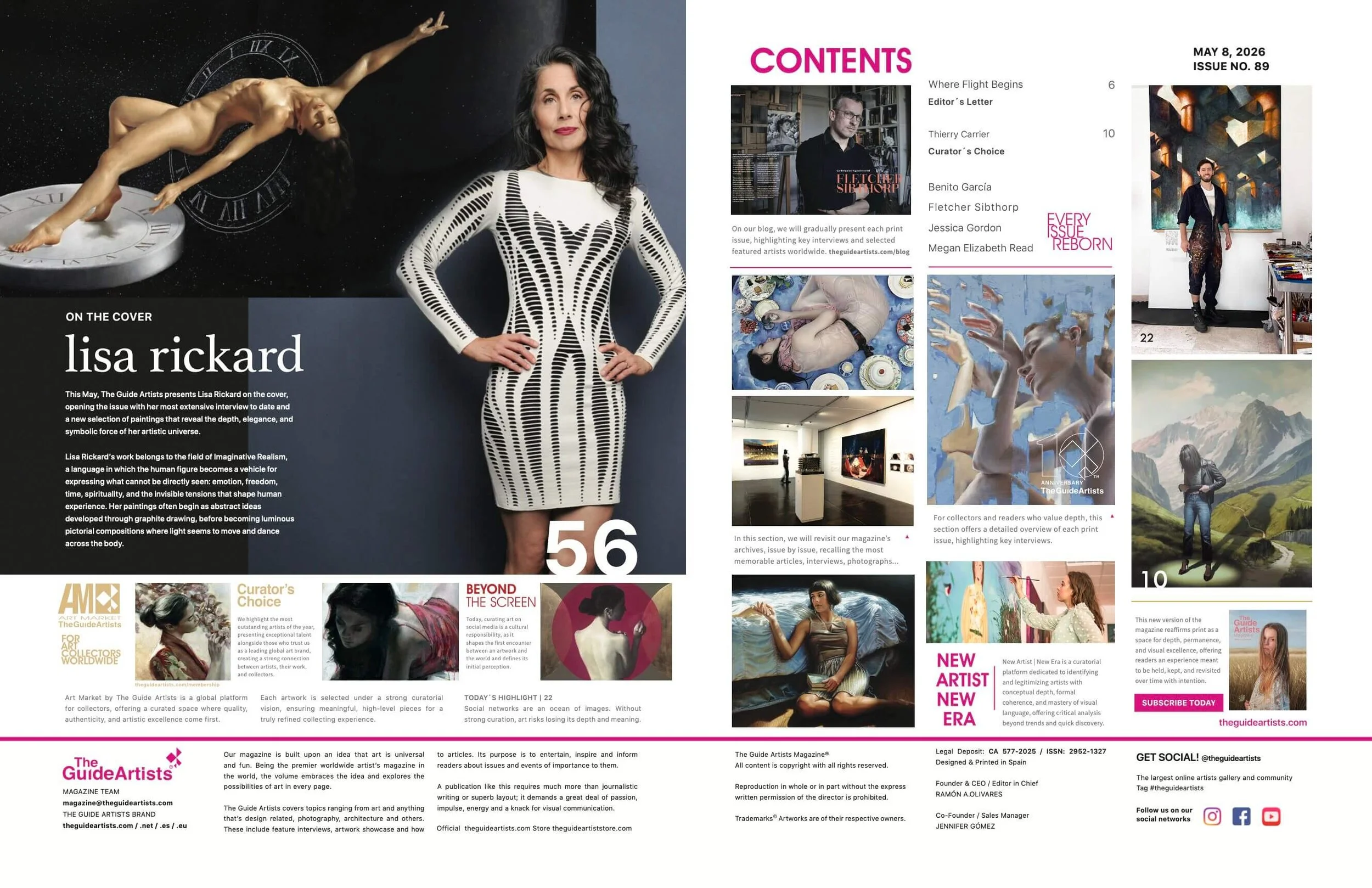
We begin May with Lisa Rickard on the cover of The Guide Artists, an artist who brings together the tradition of classical painting with a deeply personal vision. Her work builds a visual language in which symbolism is no longer merely an aesthetic element, but becomes an emotional, poetic, and spiritual experience.
In her paintings, Lisa Rickard takes wings beyond the decorative or narrative. She transforms them into an open reflection on freedom. Traditionally associated with the divine, wings have represented elevation, purity, and the unreachable, but also distance, renunciation, and the tension between two worlds. The artist recovers this imagery and reinterprets it through an intimate sensibility, where the spiritual and the human coexist within the same territory of beauty, silence, and uncertainty.
But this issue does not stop with a single voice. Throughout the magazine, we also bring together other artists who expand this dialogue through different languages, techniques, and sensibilities, enriching an edition defined by the diversity of perspectives and the strength of each individual proposal. Painting, drawing, experimentation, and visual narrative coexist in a selection that defends the unique identity of each creator.
This is how we begin May with a question that runs through the entire edition: where does flight truly begin? Perhaps not in the wings themselves, but in the ability to imagine it, and in the persistence of those who, through art, continue searching for new ways to elevate the gaze.
The Guide Artists
Discovering and presenting the finest artists of our era.